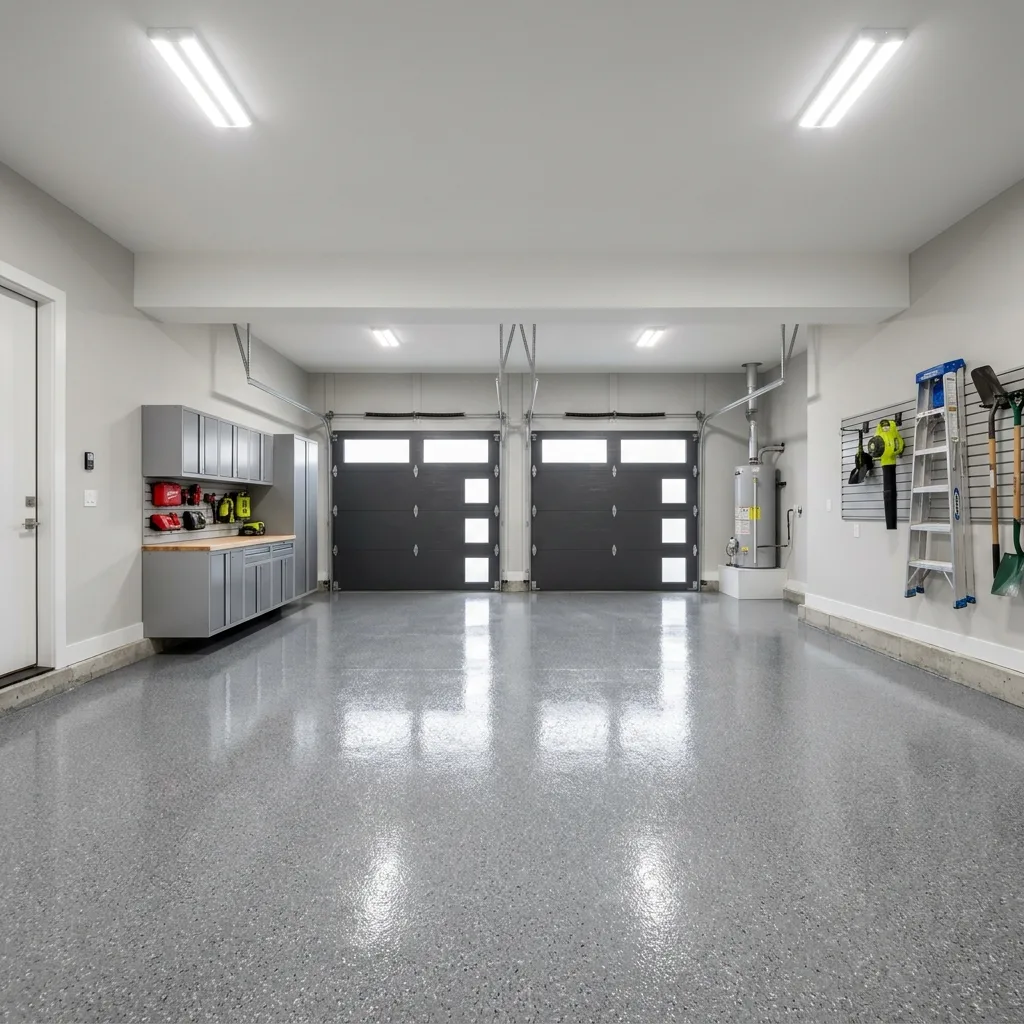
Epoxy Flooring Ottawa & the NCR: Residential & Commercial Coating, Installation & Repair
Ottawa's Technical Epoxy Flooring Contractor
Across the National Capital Region, our crews install residential, commercial, and industrial epoxy systems engineered for the specific stresses NCR concrete lives under: 224 cm of annual snow, Leda clay slab movement, aggressive road salt from the 417 corridor, and freeze-thaw cycling that pushes past -30°C.
Every installation is seamless. We work in single-car garages in Kanata, century-home basements near the Rideau, boutique retail floors in ByWard Market, federal facilities across the core, cold-storage warehouses in Nepean, laboratory environments in the Kanata tech corridor, and NFPA 99 conductive floors for healthcare and electronics. Our chemistry stack covers 100% solid epoxy, aliphatic polyaspartic, decorative metallic and 3D pours, quartz and vinyl flake broadcast, urethane cement, and ESD conductive systems.
Whether the project is a decorative garage coating in Rockcliffe Park, a CFIA-compliant kitchen behind an Elgin Street restaurant, or a forklift-rated floor along Hunt Club Road, the workflow stays the same. CSP 3 diamond grinding, structural crack repair, ASTM F2170 in-slab moisture mitigation, and a documented install. Basement systems open at $6.50 per sq ft installed, decorative metallic pours from $9, and commercial warehouse work from $5.
We build floors around 100% solid epoxy base coats and UV-stable aliphatic polyaspartic wear layers rated to -25°C. The point is reduced maintenance, higher operational uptime, and a surface that outlasts the shortcuts you have probably seen fail before.
Why NCR Homeowners and Facility Managers Choose Our Systems
- 100% solid commercial-grade epoxy on every project, no solvent-based shortcuts
- CSP 3 diamond-ground substrate prep on every slab, never acid etching
- ASTM F2170 in-slab moisture probes on every basement before the first coat
- Aliphatic polyaspartic topcoat: UV-stable, salt-resistant, long service life
- WSIB certified plus $2M liability, cleared for residential, commercial, federal, and institutional work
- Written quotes with scope, materials, and schedule before a single tool arrives
Get Your Free Quote
Typical response within two business hours.
Or call directly: (613) 231 8659
The Concrete Problems We See Across the NCR
Ottawa's climate load, 224 cm of yearly snow and some of the heaviest salt application in Ontario, breaks unprotected concrete on a predictable schedule. We fix each of them at the substrate.
Cracked, Stained Concrete
Every freeze-thaw cycle widens what is already there. NCR slabs see 80 to 100 cycles per season.
Winter Salt Damage
Brine tracked in from the 417 and city arterials migrates deep into garage slabs, pitting the surface and lifting weak coatings.
Damp Basements
Century homes near the Rideau Canal and Ottawa River sit on slabs that push vapour upward year-round without a barrier.
Peeling Old Epoxy
Budget solvent-based coatings applied over acid-etched slabs delaminate within two winters. We see it constantly.
Residential Epoxy Flooring for Ottawa Homes
Garage, basement, decorative, and patio coatings engineered for -30°C winters. Warranty issued in writing on every install.
 Most Popular
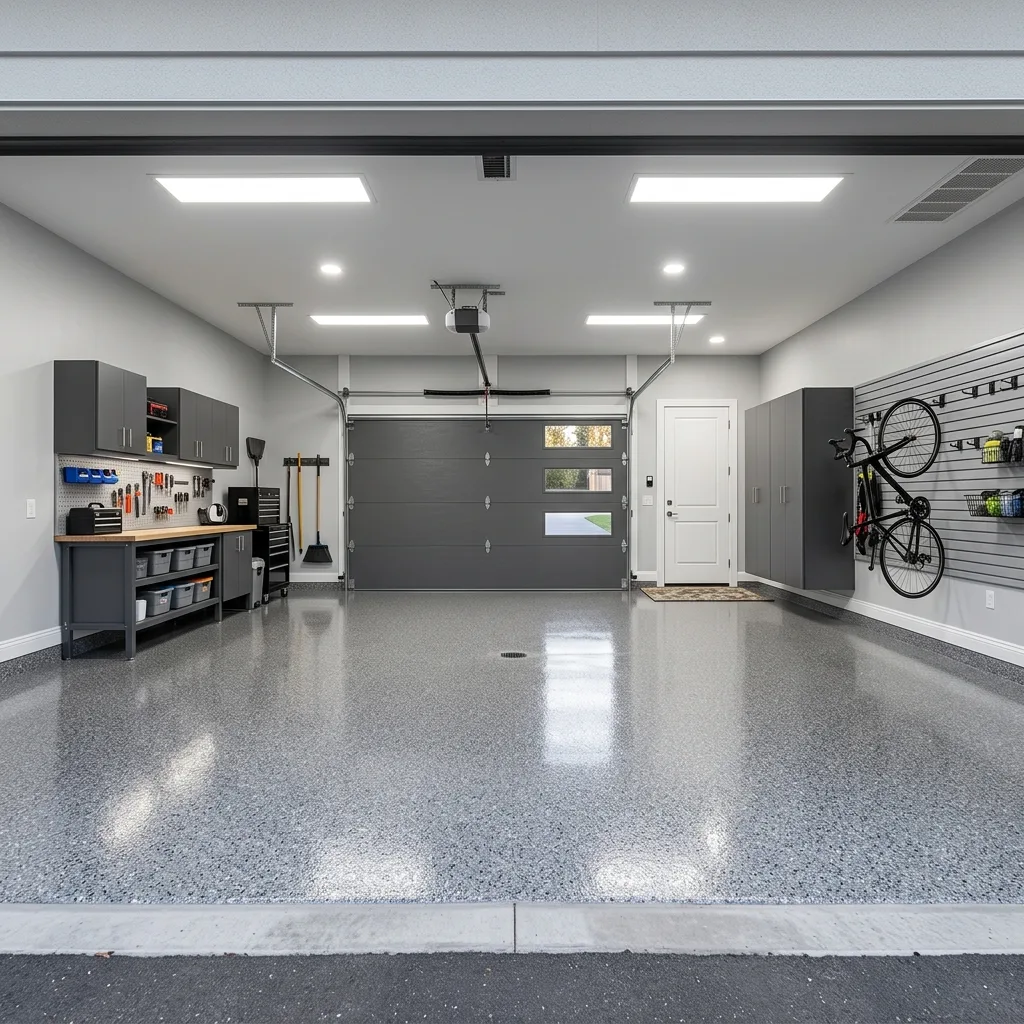
 Garage Epoxy
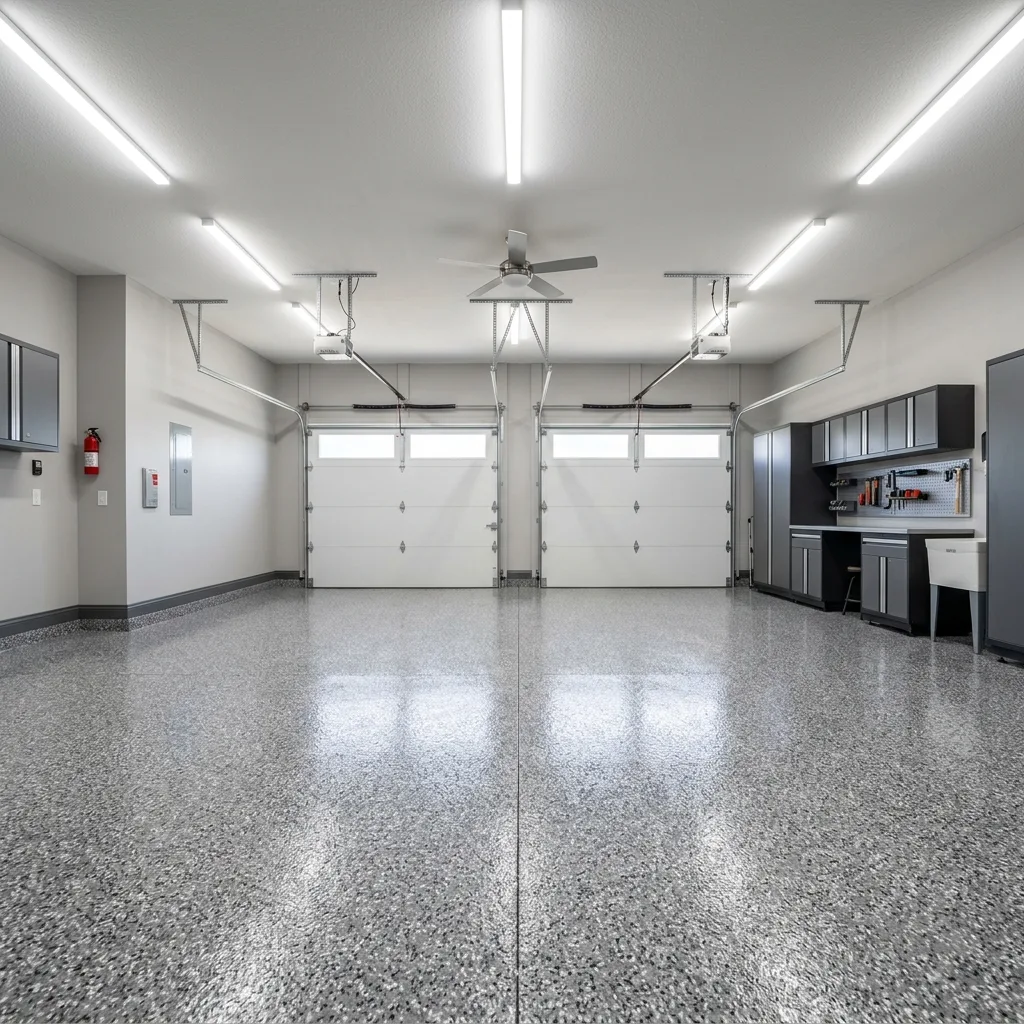
Salt-proof, hot-tire-resistant garage floor systems built for NCR winters. Diamond-ground to CSP 3, ASTM F2170 moisture verified, 100% solid epoxy base with quartz or metallic flake, and a UV-stable polyaspartic topcoat. A 400 sq ft single-car garage runs roughly $2,400 to $3,800 installed and wraps in one to two days. Anti-slip grit and WSIB coverage standard.
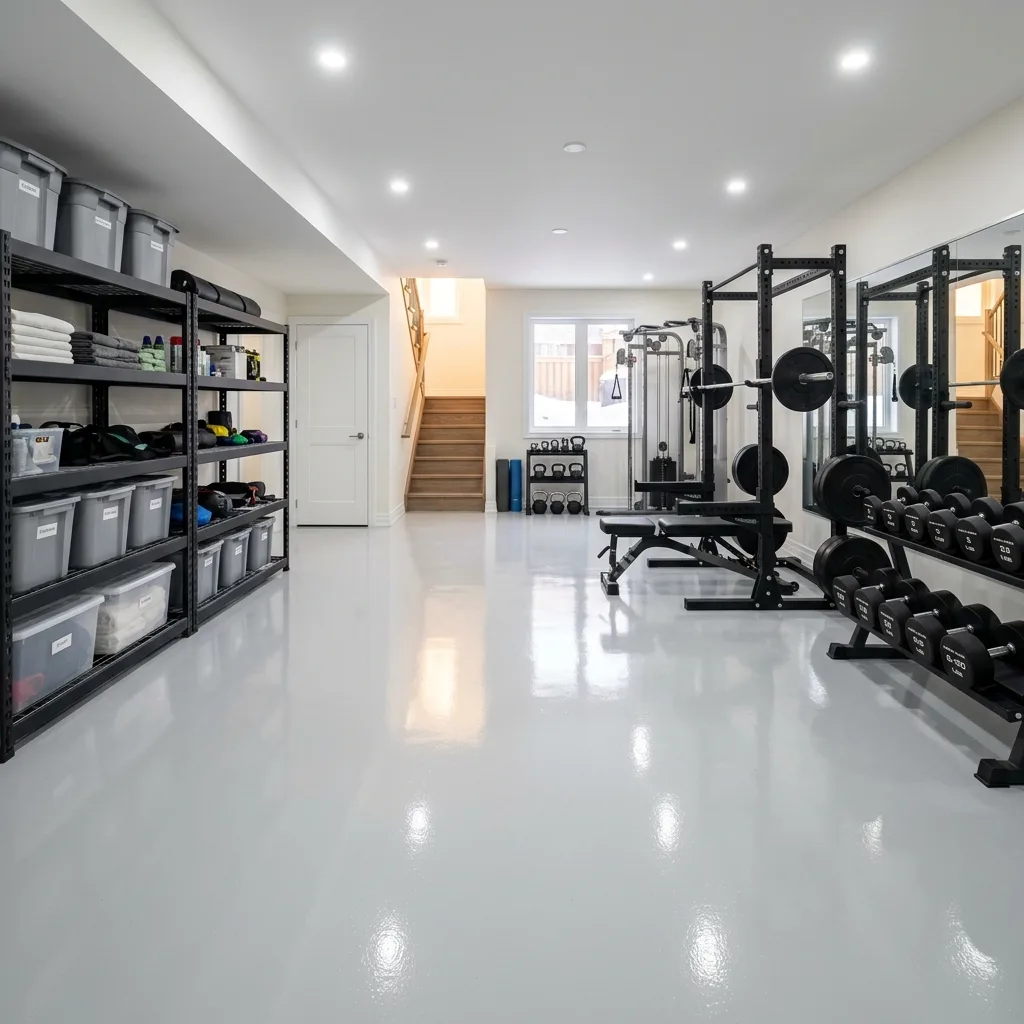
Basement Epoxy
Seamless zero-VOC epoxy floors for NCR basements, engineered around the Leda clay vapour drive that destroys ordinary coatings below grade. Every slab gets 72 hours of ASTM F2170 in-situ humidity testing before a drop of primer goes down. Pricing runs $4 to $13 per sq ft installed, most 600 sq ft basements finish in two working days, and the zero-VOC chemistry stays safe for occupied homes. WSIB-certified crews on every install.
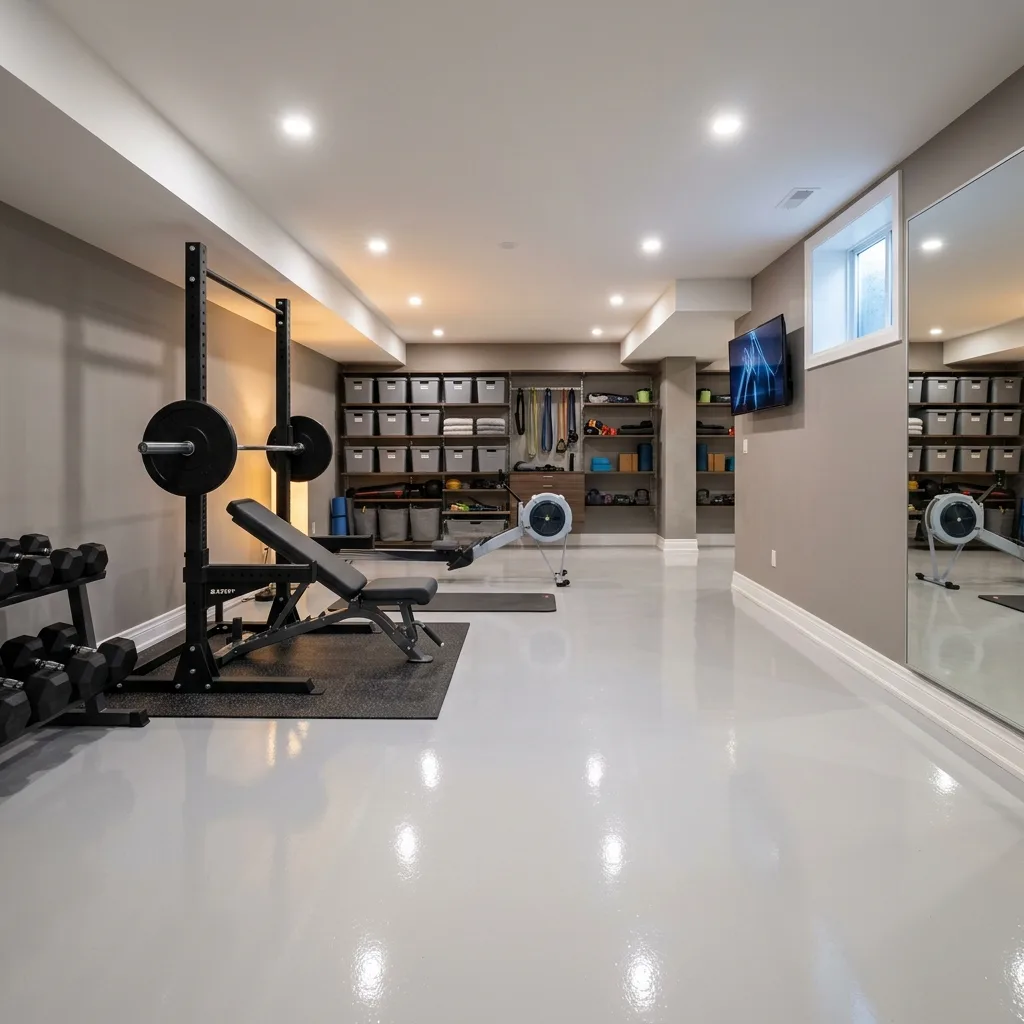
Metallic Epoxy
Hand-manipulated metallic pigment builds deliver a 3D liquid-art surface where no two floors are ever identical. Installed pricing runs $13 to $35 per sq ft; a 500 sq ft basement or showroom wraps in 2 to 3 days. A UV-stable aliphatic polyaspartic topcoat holds colour vivid under Ontario sun and retail LED lighting past the 15-year mark.
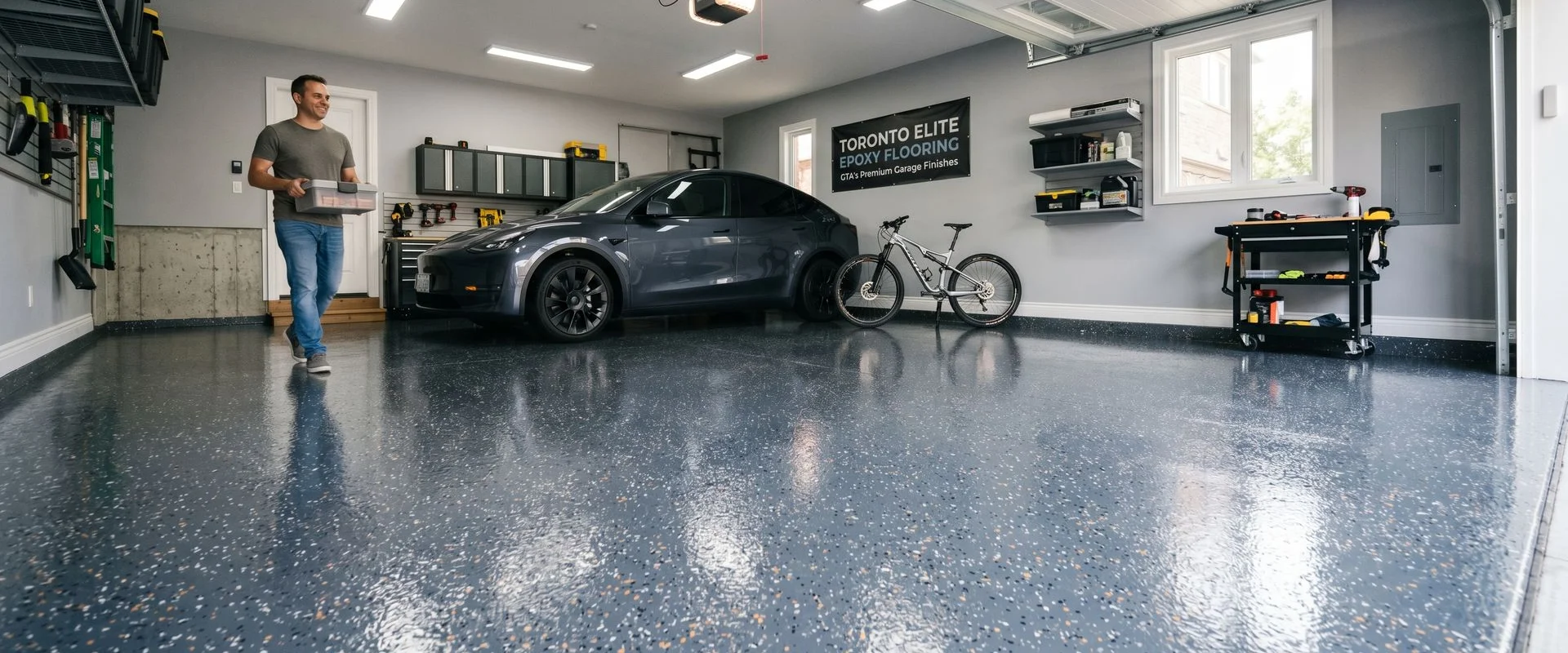
Polyaspartic
Aliphatic polyaspartic returns most residential garages to vehicle traffic inside 24 hours, roughly four times harder than a standard epoxy topcoat with full UV stability and cold-weather application down to -20 C. Installed pricing runs $5.50 to $9 per sq ft; a typical two-car garage finishes in a single day. WSIB coverage and $2M commercial general liability on every NCR install.
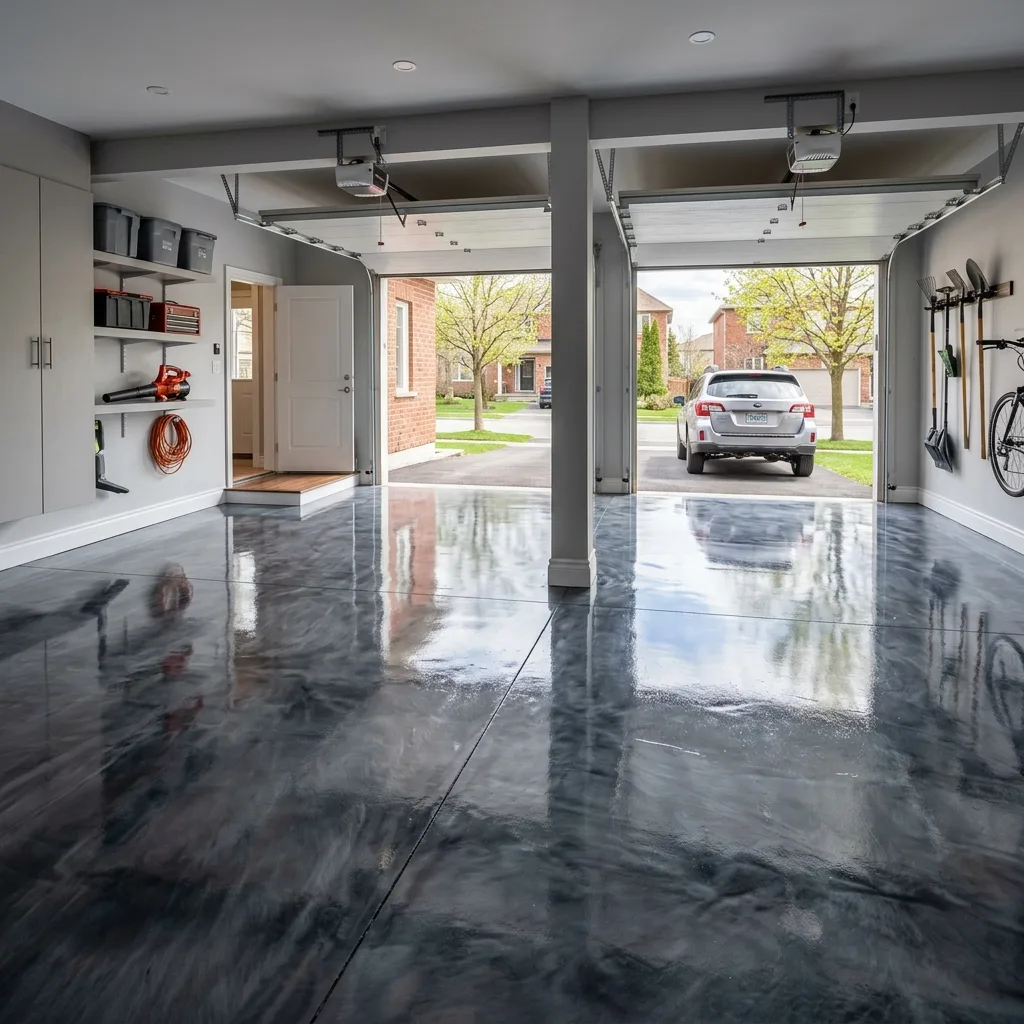
Concrete Polishing
Progressive diamond grinding up to 1,500-grit sealed with a lithium silicate densifier produces a polished concrete surface that reflects light and eliminates any wax or topcoat schedule. Installed pricing runs $3 to $8 per sq ft; most commercial floors are complete inside 2 to 3 days. Retail, restaurant, and federal office builds in the NCR pick polishing for its 20-year-plus lifespan.
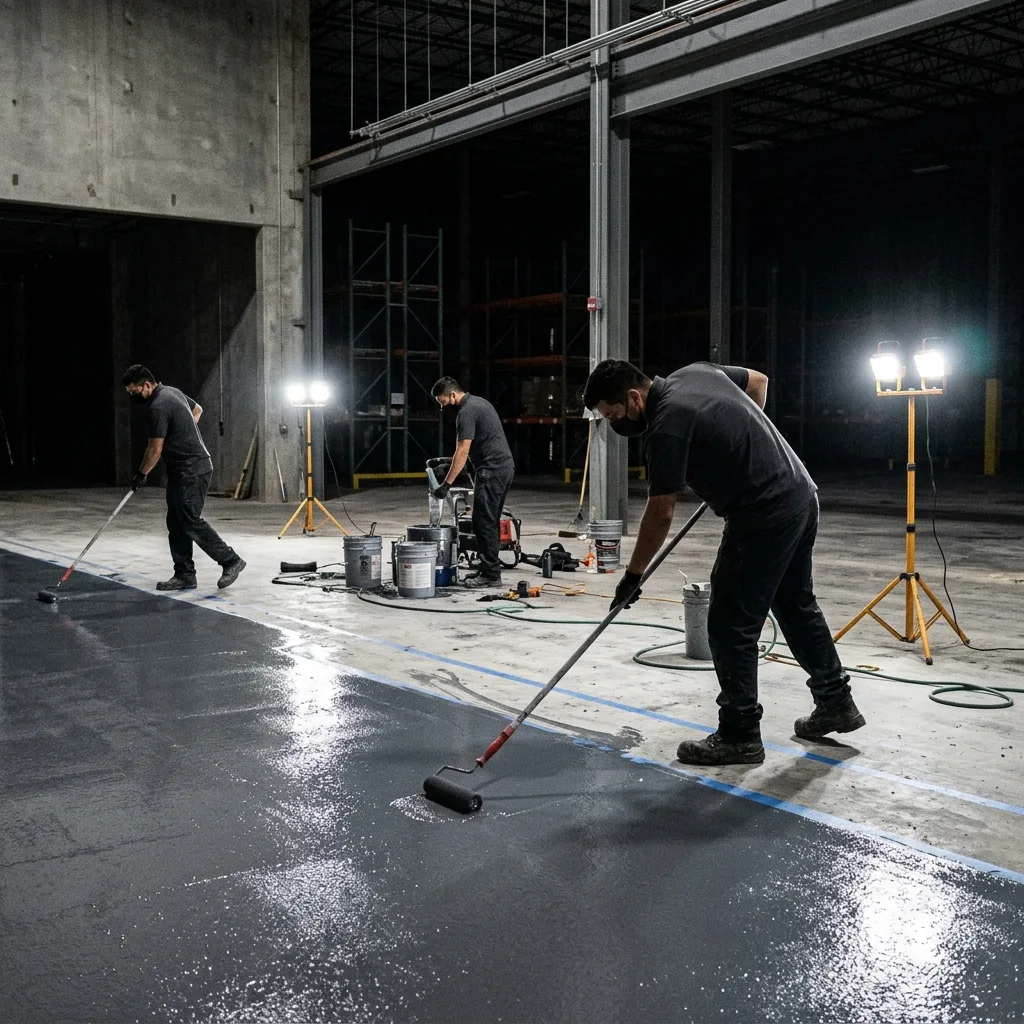
Concrete Repair
Carbon-fibre crack stitching, polyurea injection, spall patching with epoxy mortar, and self-levelling underlayment restore any NCR concrete slab back to a CSP 3 bondable substrate before coating. Crack work opens at $8 to $18 per linear foot; slab resurfacing from $3 per sq ft. CSP 3 is grind-gauge confirmed before any coating is applied.
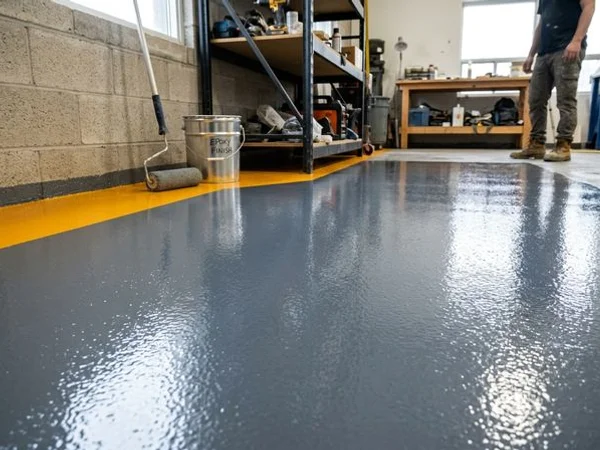
Epoxy Repair
Full mechanical removal of failed or peeling epoxy back to bare concrete, an ASTM F2170 moisture re-test, and a fresh 100% solid system rated for 10 to 15-plus years on a correctly profiled CSP 3 slab. A full recoat runs $3 to $7 per sq ft installed. Most residential garage repairs wrap inside a two-day window. Root cause is diagnosed first so the new floor does not fail the same way.
Outdoor Epoxy
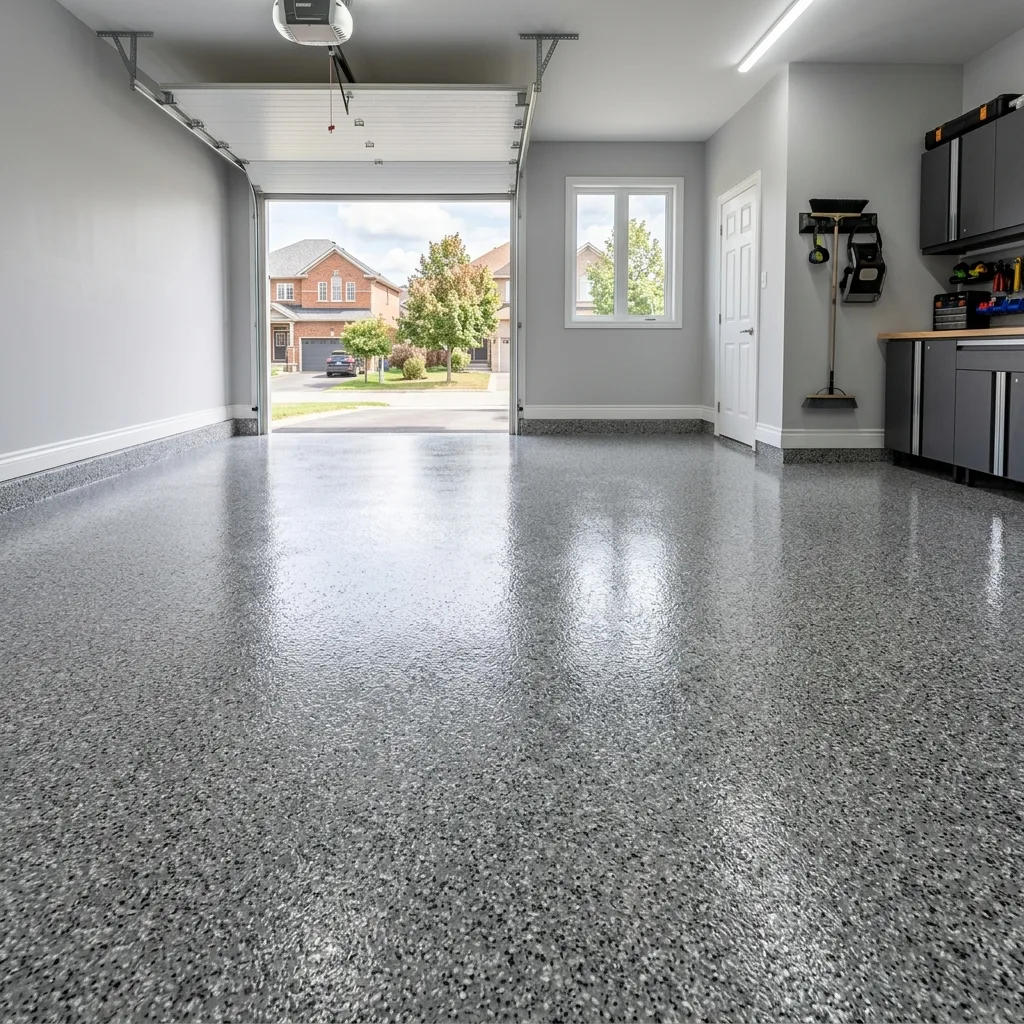
For NCR pool decks, patios, and walkways, our aliphatic polyaspartic exterior coating is engineered to survive 80 to 100 freeze-thaw cycles per winter, road salt chloride loads, and pool chemistry without amber yellowing. A 400 sq ft residential deck typically completes in 2 days at $2,400 to $4,400 installed, including sealed expansion joints and quartz aggregate broadcast for wet-area traction.
Commercial & Industrial Epoxy Flooring
WSIB-certified installations for warehouses, restaurant kitchens, showrooms, parking decks, and regulated facilities across the NCR. Overnight scheduling keeps you operational.
Commercial Epoxy
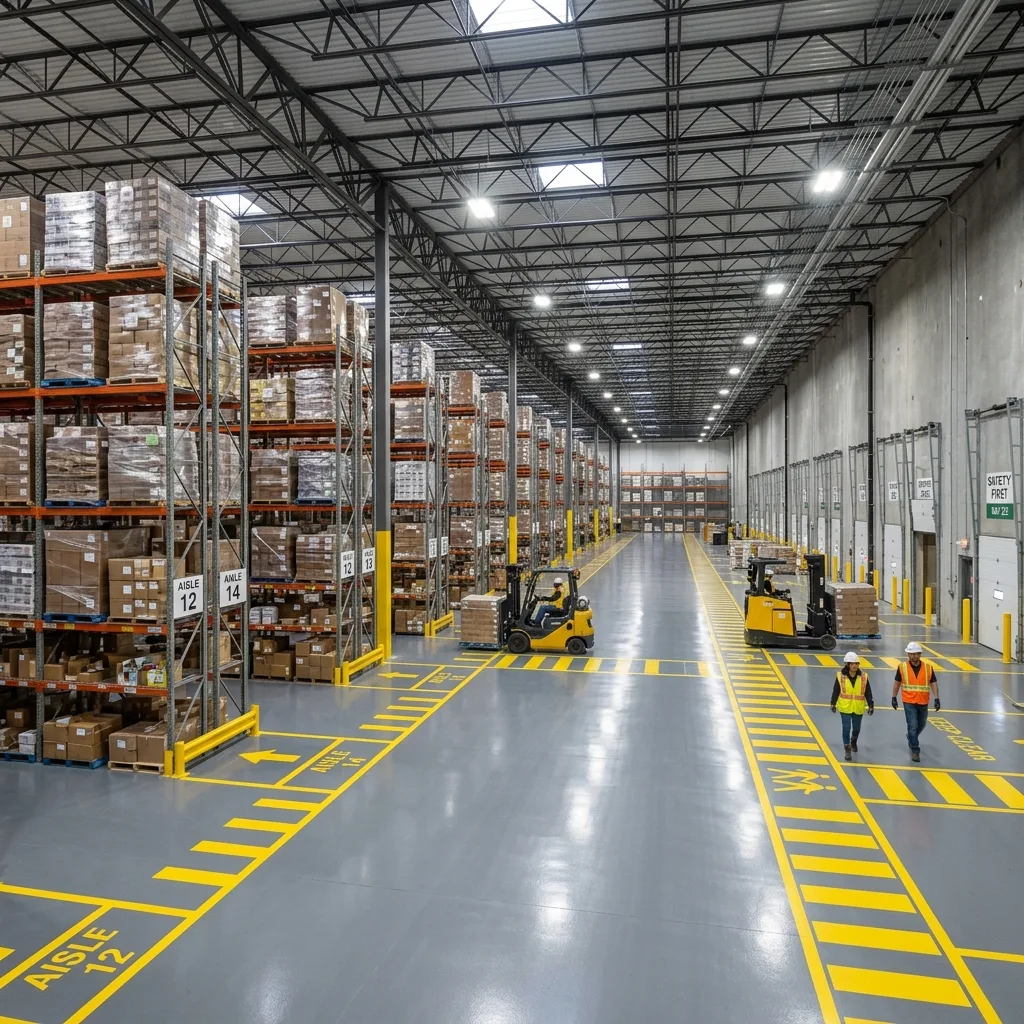
Shot-blasted 100% solid commercial-grade epoxy systems built for manufacturing plants, distribution centres, and 24-hour food operations across Ottawa. Installed pricing runs $10 to $15 per sq ft with off-hours scheduling that returns your floor before the next shift starts. WSIB-certified crews, $2M liability, and full compliance documentation on every project.
Warehouse Epoxy
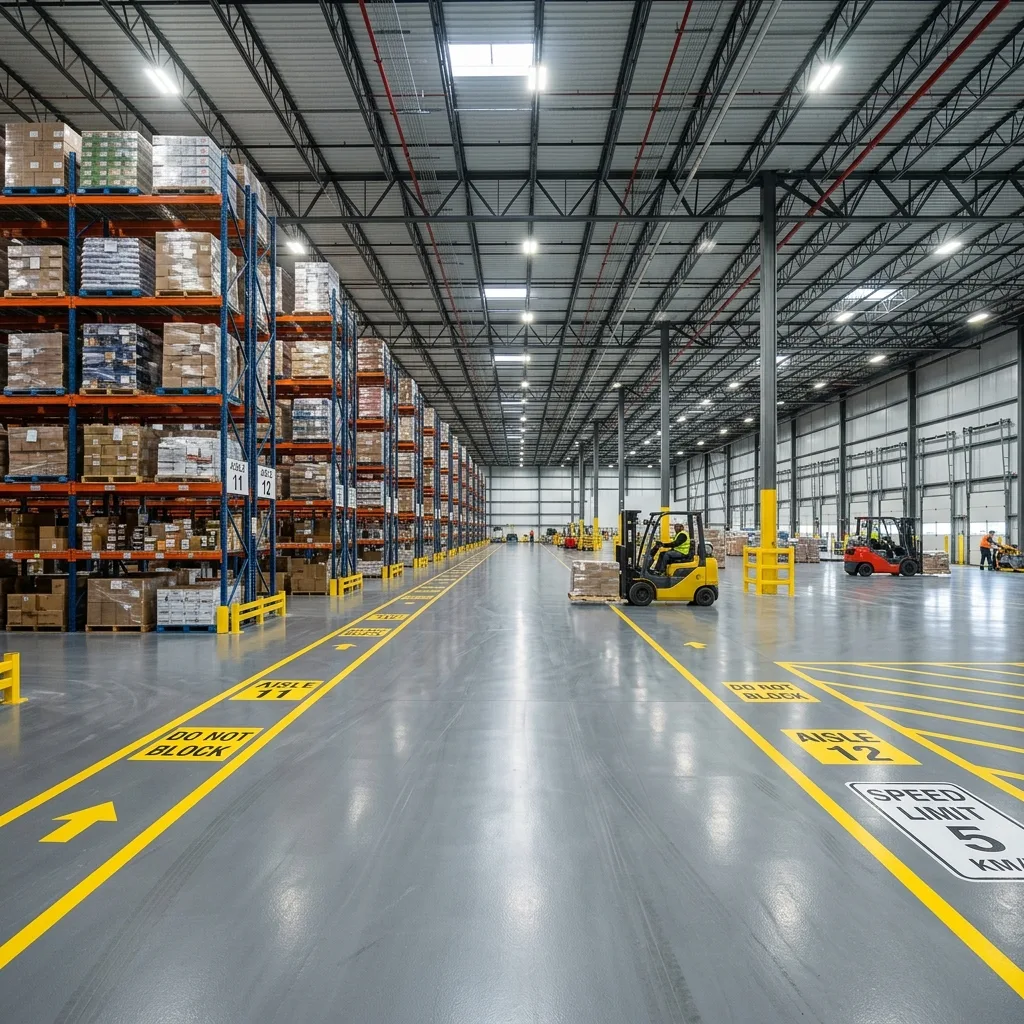
Forklift-rated 100 percent solid epoxy systems with shot-blast prep, chemical-resistant topcoat, and embedded aisle marking for NCR distribution centres, logistics hubs, and federal warehouse operations. From $3 to $7 per sq ft installed, phased weekend windows keep operations running, WSIB-certified crews and $2M liability on every commercial project.

Kitchen Epoxy
For NCR restaurants and food-service operators, we build CFIA-compliant seamless epoxy floors with 4 to 6 inch integral coving, quartz anti-slip broadcast, and zero-VOC chemistry. Installed pricing typically sits at $5 to $11 per sq ft, with most kitchens wrapped inside two overnight shifts. Health-inspection documentation and off-hours scheduling are standard on every project.
Restaurant Epoxy
Front-of-house epoxy floors built for Ottawa dining rooms, bar zones, entryways, and washrooms. Seamless solid, flake, and metallic systems replace grouted tile with a coved, cleanable surface. Off-hours overnight installs, WSIB-certified, from $6 to $14 per sq ft installed on 200 to 2,000 sq ft footprints.
Showroom Epoxy
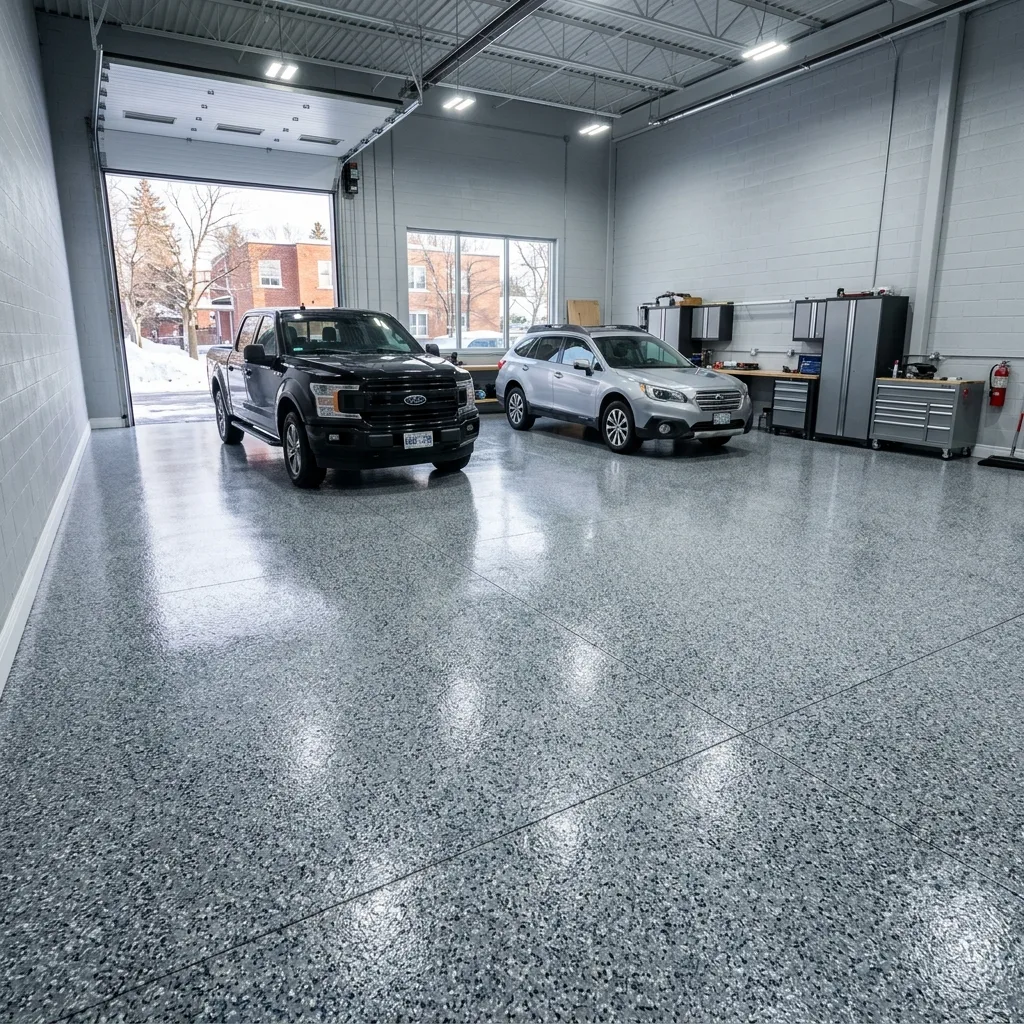
For NCR retail spaces: high-gloss epoxy with RAL-matched pigments, logo inlays, and an aliphatic polyaspartic finish built for sustained retail traffic without scuff or amber shift. Overnight scheduling closes the gap between shift change and opening. From $4 to $13 per sq ft installed, WSIB-certified, $2M liability on every NCR install.
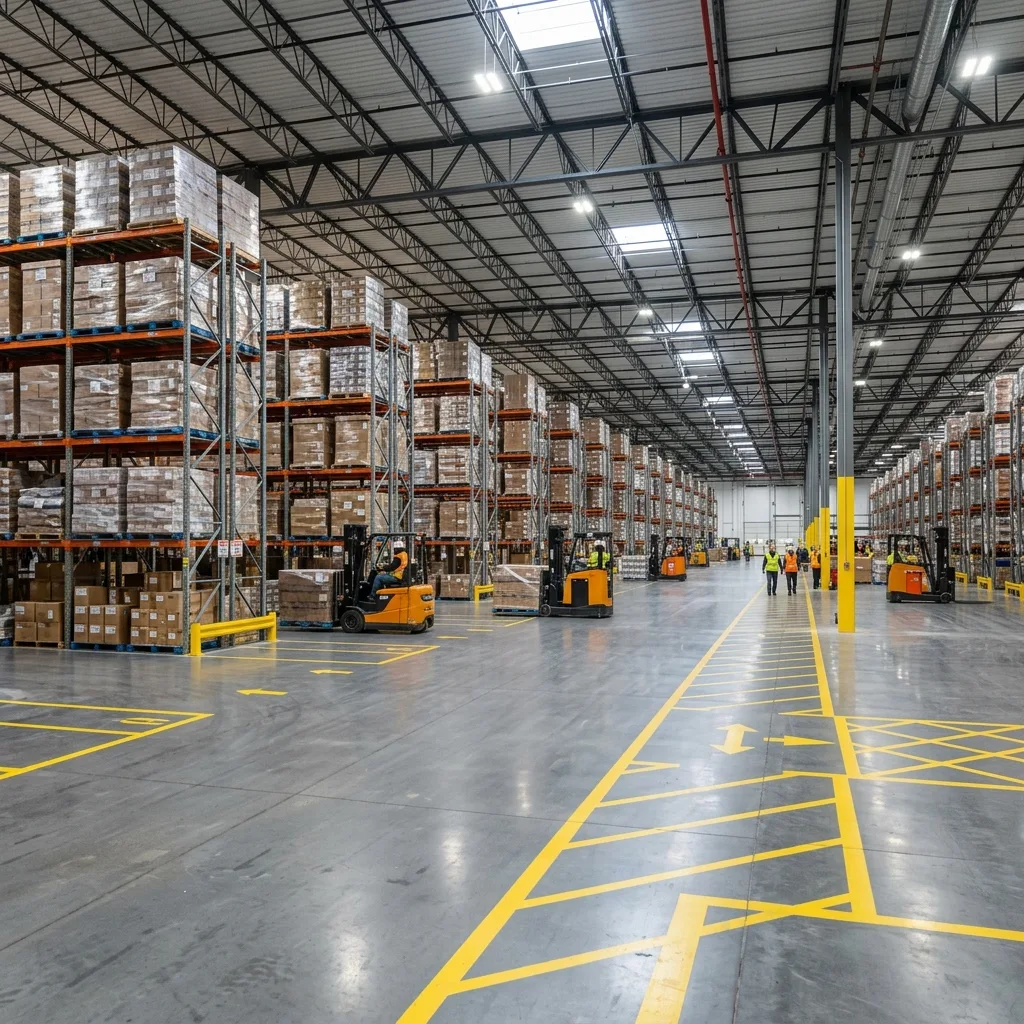
Parking & Hangar
Vehicle-rated polyurea and polyaspartic deck coatings for Ottawa parkades, condo garages, and hangars, engineered to the NCR's chloride load and 80 to 100 freeze-thaw cycles per season. Line marking, stall numbering, and wayfinding embed under the topcoat. Installed pricing runs $4 to $9 per sq ft; phased overnight and weekend sequencing keeps every level operational. WSIB coverage and $2M commercial general liability documented at contract signing.
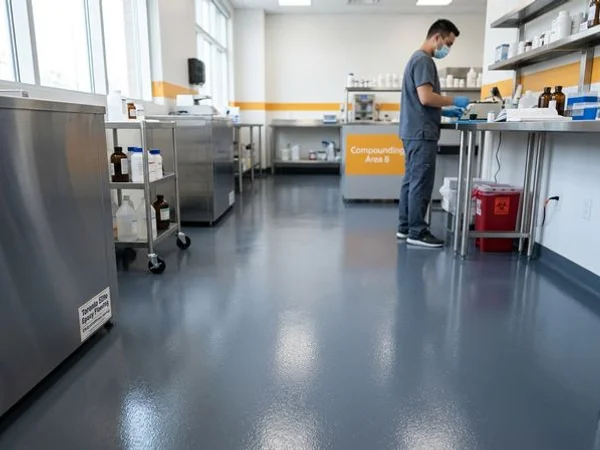
Medical Epoxy
Seamless antimicrobial epoxy with 4 to 6 inch integral wall coving and zero-VOC chemistry for Ottawa hospitals, clinics, schools, and long-term care operators. Installed pricing $6 to $12 per sq ft; section-by-section scheduling keeps the facility running. WSIB-certified crews, $2M liability, and full IPAC Canada compliance paperwork on every project.
ESD Epoxy
Anti-static and conductive epoxy floors for federal facilities, Kanata electronics manufacturers, and NCR data centres. Copper grounding grid, ANSI/ESD S20.20 spec, megohmmeter-verified at handover. Installed cost $7 to $14 per sq ft, with a signed compliance report on every job.
Specialty & Industrial Epoxy Flooring in Ottawa
Regulated, high-spec systems for pharmaceutical cleanrooms, laboratories, cold storage, wash bays, automotive service bays, and secondary containment. WSIB-certified, compliance documentation on every install.
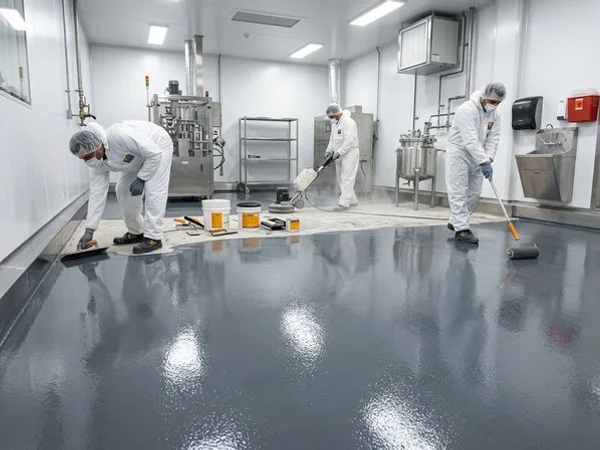
Pharma Cleanroom Epoxy
Novolac base coats, ESD-dissipative topcoats, and zero-particle-emission chemistry engineered for ISO 5 to 8 pharmaceutical cleanrooms, compounding pharmacies, and Health Canada-licensed drug premises across Ottawa and the National Capital Region. Installed pricing $12 to $20 per sq ft; phased overnight scheduling preserves cleanroom classification throughout. WSIB coverage, $2M commercial general liability, and a complete GMP compliance package accompany every project.
Laboratory Epoxy
Novolac chemical-resistant floor systems for federal research labs, university science facilities, clinical testing labs, and industrial materials analysis operations across the NCR. Rated against concentrated acids, bases, and solvents at real laboratory strength. Pricing runs $10 to $18 per sq ft installed. WSIB-certified, $2M liability, full compliance documentation.
Cold Storage Epoxy
Polyurea and polyaspartic freezer floor systems rated for -40 C continuous cryogenic service, sustained thermal shock cycling, and daily forklift traffic. Installed across cold storage warehouses, blast tunnels, pharmaceutical cold chain rooms, and industrial cryogenic facilities in the National Capital Region. Installed pricing lands between $8 and $15 per sq ft. WSIB-certified crews carry $2M liability on every contract.
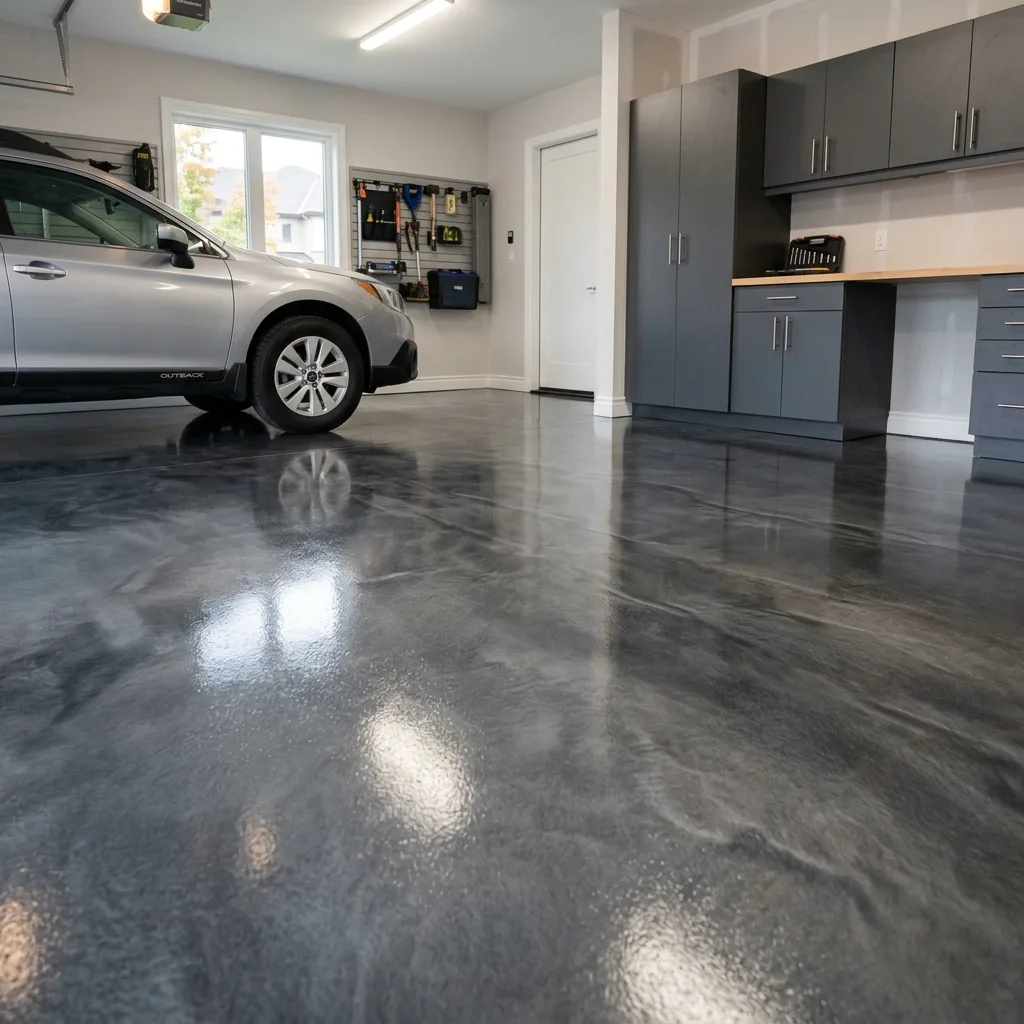
Wash Bay Epoxy
Polyurea and urethane cement floor systems for truck wash bays, fleet maintenance shops, food plant washdown zones, and industrial cleaning stations across Ottawa and the NCR. Rated for hot pressure washing, alkaline degreasers, and petroleum contamination. From $7 to $12 per sq ft installed, WSIB-certified with $2M liability.
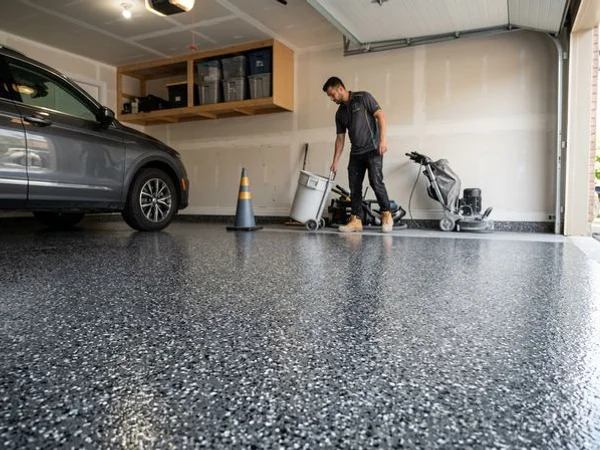
Auto Service Bay Epoxy
Broadcast quartz and polyaspartic epoxy systems built for dealership service departments, quick-lube facilities, and independent workshops across the National Capital Region. Hoist pad reinforcement, petroleum decontamination, and ASTM D2047 anti-slip aggregate on every bay. Installed pricing sits between $6 and $12 per sq ft. Bay-by-bay overnight scheduling keeps the shop open. WSIB-certified with $2M liability.
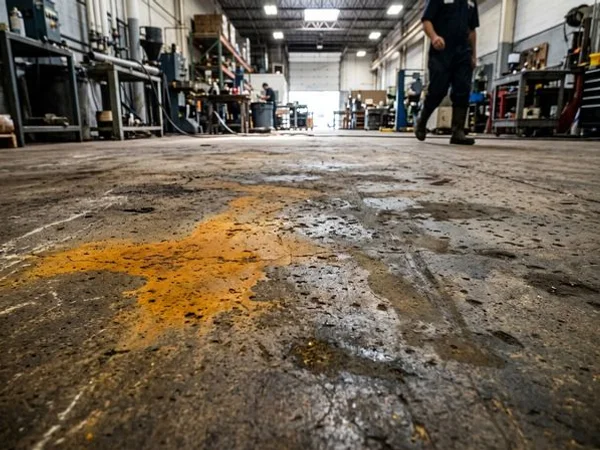
Secondary Containment
Immersion-rated novolac epoxy, vinyl ester, and polyurea secondary containment coatings for fuel tank berms, chemical storage rooms, transformer pads, and industrial spill floors across Ottawa and the NCR. TSSA-compliant, chemical-profile-specific specifications. From $10 to $18 per sq ft installed with full compliance documentation, WSIB certification, and $2M liability on every project.
What Does Epoxy Flooring Cost in Ottawa?
Installed pricing by system. Every quote is free, on-site, and delivered the same day.
| System | Installed Price | Typical Project | Timeline |
|---|---|---|---|
| Basement Epoxy | $6.50 to $12 / sq ft | 600 sq ft rec room: $3,900 to $7,200 | 2 days |
| Garage Epoxy (quartz flake + polyaspartic) | $10 to $15 / sq ft | 400 sq ft single-car: $4,000 to $6,000 | 1 - 2 days |
| Decorative / Metallic Epoxy | $13 to $35 / sq ft | 400 sq ft: $5,200 to $14,000 | 3 - 4 days |
| Polished Concrete | $3 - $8 / sq ft | Varies by slab condition | 2 - 3 days |
| Commercial / Industrial | Custom quote | Scope and chemistry dependent | Overnight shifts |
What Moves Your Residential Number
Two things drive almost every quote in the NCR: the state of the slab and the system you pick. Clean concrete lands at the low end. These items add cost:
- +Oil-soaked concrete or heavy spalling - means additional degreasing and grinding passes before any resin gets mixed
- +A previous solvent-based coating - has to come off completely before we recoat. Contractors who skip this step create the mid-job surprises you have probably heard about
- +Active moisture, common in older Nepean and Glebe slabs - calls for a vapour-barrier primer before the base coat
We assess on site the same day, measure, run moisture probes, and quote. No travel fees inside the NCR, no obligation after.
Commercial & Industrial Pricing
Commercial numbers are custom because scope and chemistry vary too widely for a rate sheet.
Both installations use identical 100% solid commercial-grade material. The on-site assessment locks in spec and scheduling before any work begins.
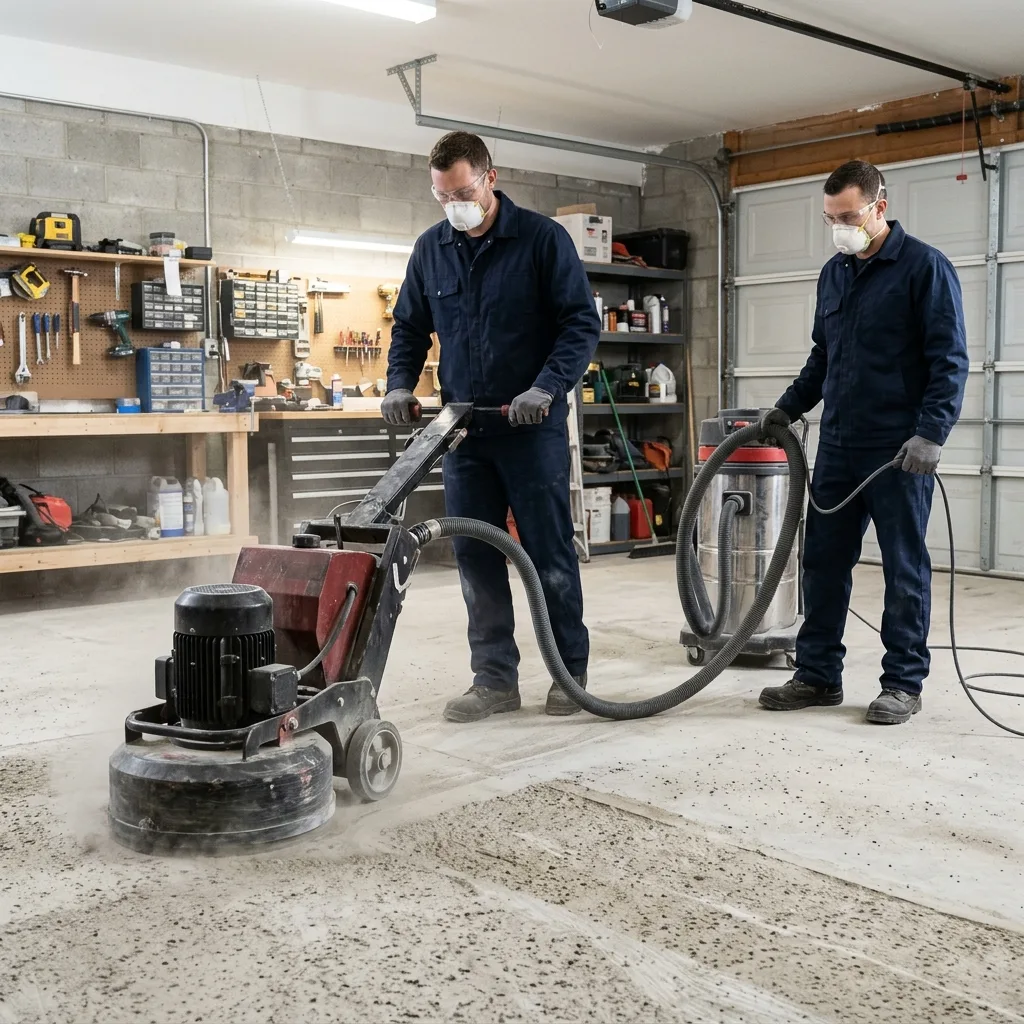
Why We Lead Epoxy Flooring Across the Capital Region
One in-house crew, one equipment fleet, one commercial-grade materials list, covering luxury residential floors in Rockcliffe alongside forklift-spec industrial installs in Kanata.
Trusted by Homeowners and Businesses Across the NCR
Zero-VOC commercial-grade epoxy on every project. No solvent-based shortcuts.
Written Scope, Materials, and Schedule Before We Start
Full documentation up front. No surprises on cost, materials, or timeline.
CSP 3 Diamond-Grind Prep on Every Slab
Full diamond and shot-blast fleet in-house. We never sub the prep.
WSIB Certified with $2M Liability
Cleared for residential, commercial, federal, and municipal contracts.
How Long Does Epoxy Actually Last in Ottawa?
A 100% solid epoxy floor finished with an aliphatic polyaspartic topcoat delivers long service life in NCR conditions when it is installed and maintained correctly. Most early failures we see trace to one of three shortcuts:
- ✕ Acid etching in place of diamond grinding - leaves the laitance layer intact and creates a profile too shallow for a mechanical key. Adhesion is never full-strength.
- ✕ Skipping ASTM F2170 moisture testing - means vapour drive from below blisters the coating within months
- ✕ Solvent-based products - lose volume as carriers off-gas and never reach genuine film thickness
A 100% solid system bonded to a CSP 3 ground slab beats any of these shortcuts by a decade of service life.
Ontario's climate is the defining variable for NCR floors. Ottawa averages 224 cm of snow annually, and the volume of road salt spread across the 417 and municipal roads is one of the most aggressive attack loads a coating chemistry has to face.
- ✔ Polyaspartic rated to -20°C - stays flexible through capital-region winters and does not microcrack along thermal stress lines
- ✔ Shore D 78+ hardness - shuts down hot-tire pickup when heated tires cool on the coating surface
- ✔ Recoat every 7 to 10 years at $2 to $6 per sq ft - refreshes the wear layer and pushes the base system out indefinitely
Our Four-Step Install Sequence
Diamond-grind prep, moisture testing, broadcast flake, polyaspartic wear coat. Same order every time.
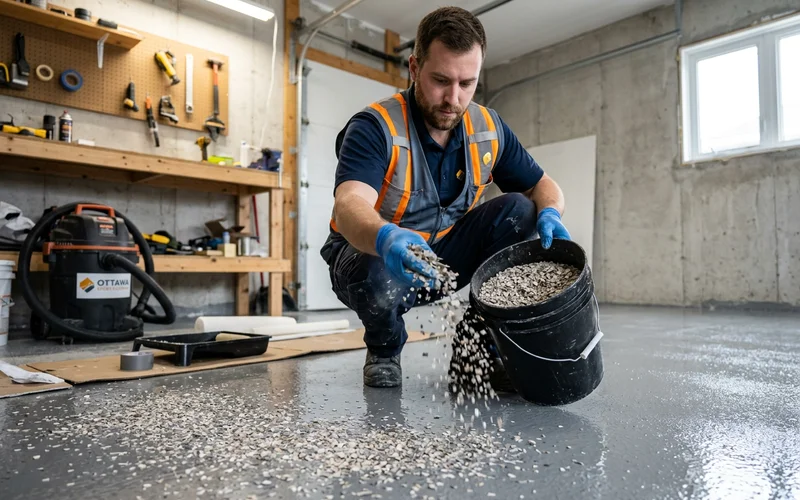
Free On-Site Quote
Same-day slab assessment and per-sq-ft quote anywhere in the National Capital Region.
Diamond-Grind Prep
Diamond tooling profiles the slab to CSP 3 and strips laitance, not acid etching. ASTM F2170 probes seated in the concrete measure internal RH. When readings top the threshold, a moisture-mitigating primer goes down before anything else.
Base + Broadcast
100% solid epoxy base coat with quartz or metallic flake broadcast to refusal.
Polyaspartic Topcoat
UV-stable wear layer with anti-slip grit. Warranty issued.
Epoxy, Polyaspartic, Polyurea: What Belongs Where
Epoxy Base
Zero-VOC 100% solid build coat. Delivers film thickness, chemical resistance, and a permanent mechanical bond to diamond-ground concrete. Belongs at the bottom of a two-coat stack, not on the surface.
Best for: Every residential and commercial floor we install
Polyaspartic
UV-stable aliphatic chemistry that cures in 24 hours, tolerates application down to -20°C, and holds gloss under direct sun and LED retail lighting. Shore D 75 to 82 hardness beats standard polyurethane for scuff and abrasion.
Best for: Garages, showrooms, basements, exterior, and fast-return commercial
Polyurea
Fastest cure of the three at 30 to 90 minutes, highest flex rating, best crack-bridging over substrates that move. Used on suspended parking decks, exterior work, and cold-weather installs where epoxy cannot cure reliably.
Best for: Parking decks, crack-bridging, exterior, cold-weather scheduling
Nearly every premium garage and residential floor across the NCR uses a hybrid stack. A 100% solid epoxy base carries film thickness and chemical resistance, gets broadcast to refusal with coloured vinyl flake or metallic pigment, and then a polyaspartic wear coat locks the whole thing under a UV-stable surface that returns to service fast. That pairing is the same specification we run in automotive showrooms and WSIB-regulated commercial facilities. Either chemistry used solo underperforms the hybrid for long-term residential and light-commercial work.
Waterborne epoxies, the workhorse of budget installs, hit only 40 to 60 percent solids by volume. The rest evaporates during cure and the finished film is thinner than the wet build suggested. A 100% solid base loses no volume to evaporation. What we mix stays in the floor, delivering full film thickness, full adhesion strength, and the Shore D 78+ hardness the system is rated for.
Is Epoxy Flooring Worth the Investment?
Book a Free On-Site Assessment
We inspect the slab, spec the right system, and quote on the spot. No pressure, no obligation.
What Our Customers Say
"Our new garage in Aylmer went straight into a full quartz flake system before the first snow. Two seasons of brine tracked in from the QC-5 and the surface still looks factory-new. The moisture reading they showed us at the quote convinced me they knew what they were doing."
"Wanted a smoky pewter metallic for a loft renovation over Sussex. Crew tested the slab, warned us about vapour drive from the century-brick foundation, and specified a moisture primer. Result is genuinely beautiful and it has not moved in a year."
"Previous contractor rolled a solvent-based product over acid-etched concrete. Peeled inside eight months. This crew ground the whole floor off, probed for moisture, and installed a proper 100% solid system with polyaspartic on top. Different universe."
"1912 semi with a basement that had never been dry a single spring. F2170 probes went in, vapour-barrier primer, then a seamless finish. Two spring thaws later, dry. Recommended without reservation."
"Needed a WSIB-certified crew for a small distribution facility. Forklift-rated floor with embedded aisle lines went in over a Saturday overnight. Zero downtime, zero wear after eight months of daily pallet traffic."
"Custom metallic pour in gunmetal for the garage. Every neighbour who walks by asks who did it. Craftsmanship is at a level I did not expect to find in Ottawa."
Coverage Across Ottawa and the National Capital Region
Same-day free on-site quotes across Kanata, Nepean, Orleans, Barrhaven, Gatineau, and the outlying NCR communities.
View All Service Areas
How Our Work Shifts Neighbourhood to Neighbourhood
Slab age, housing stock, and local demand differ noticeably across the NCR. Here is how each area changes what we install.
Epoxy Flooring in Kanata
Kanata North's tech corridor demands anti-static ESD systems for electronics QC and lab benches, while the modern subdivisions produce steady garage work for homeowners protecting new slabs from 417-corridor salt. Fresh-build settling routinely opens hairline cracks that need repair before any coating.
Epoxy Flooring in Nepean
Mid-century subdivisions and long-established industrial sites like Colonnade Business Park mean older concrete that requires heavier grinding, moisture mitigation, and structural crack repair. Aging basements and degraded garage slabs dominate our schedule here.
Epoxy Flooring in Orleans
A fast-growing suburban east end with high volume on residential garage coatings, especially for families wanting a salt-resistant, easy-to-clean surface. Heavy snow melting inside enclosed attached garages drives concrete pitting that polyaspartic finishes are built to handle.
Epoxy Flooring in Barrhaven
Dense, still-growing suburbs where new homeowners want protection down on pristine slabs before the first winter's salt hits. High volume favours 1-to-2-day polyaspartic systems that minimise disruption for two-commuter households.
Epoxy Flooring in Westboro
Upscale mixed-use zone where boutique retail and restaurants ask for chic metallic or polished-concrete-look finishes, and affluent homeowners spec premium basement systems. Older housing stock means significant moisture-barrier work on many projects.
Epoxy Flooring in The Glebe
Century homes with old, porous, sometimes uneven concrete that needs specialised primers. Proximity to the Rideau Canal raises the odds of active vapour transmission, so ASTM F2170 probes are mandatory before any basement work goes ahead.
Preparation Decides Performance
Coating failure is almost always prep failure. CSP 3 diamond grinding and ASTM F2170 in-slab probes are mandatory on every project, from residential garage to industrial warehouse.
CSP 3 Diamond Grinding
Every slab we touch is diamond-ground to Concrete Surface Profile 3 with industrial planetary tooling. Neither acid etching nor shot blast alone matches it. CSP 3 opens the pore structure for a real mechanical key and lifts laitance, old coatings, and embedded contamination that cause later delamination.
- +Removes solvent-based coating residue
- +Delivers a uniform profile for consistent film thickness
- +Required for 100% solid epoxy adhesion
ASTM F2170 Moisture Testing
In-situ relative humidity probes sit inside the slab. Surface calcium chloride tests miss vapour rising from depth. Older concrete, especially in Nepean subdivisions and Glebe century homes, regularly reads above 85% RH internally.
- +Catches vapour drive that would blister the coating
- +Results are logged before any coating is applied
- +Triggers a moisture-mitigating primer when the number warrants it
Crack Repair and Surface Correction
Cracks, spalling, and pitting are packed with structural fillers rated for load-bearing concrete before any coating goes over the top. A slab that looks fine visually can still be oil-soaked underneath, which kills adhesion inside months. We do not skip prep on "clean-looking" concrete.
- +Structural epoxy fillers on all cracks
- +Degreasing pass on oil-saturated slabs
- +Uniform base before the primer coat
Commercial-Grade Materials on Every Project
We spec 100% solid epoxy base coats with aliphatic polyaspartic topcoats on every install, residential to industrial. No water-based product lines, no solvent-based budget lines.
100% Solid Epoxy vs. Waterborne
| Property | 100% Solid Epoxy | Waterborne Epoxy |
|---|---|---|
| Solids Content | 100% | 40 - 60% |
| Film Shrinkage on Cure | None | Moderate |
| Shore D Hardness | 78+ | 50 - 65 |
| Hot-Tire Resistance | Yes | No |
| VOC Emissions | Minimal | Higher |
Waterborne epoxy loses volume during cure as water evaporates. What is applied wet is not what stays on the slab. A 100% solid base coat builds real film thickness. Everything we mix ends up in the floor.
Shore D 78+ is the number required for vehicle traffic, forklift wheels, and heavy point loading. It also eliminates hot-tire pickup, the delamination pattern caused when highway-heated tires bond to the coating as they cool on the slab.
Standard epoxy topcoats turn brittle below -10°C and split along freeze-thaw stress lines. Our aliphatic polyaspartic stays flexible at -25°C and resists UV yellowing, both critical for NCR garages, patios, and exposed parking decks.
Polyaspartic wear coats cure far faster than standard epoxy. Foot traffic in 24 hours, vehicle traffic in 48. For commercial installs, overnight scheduling means zero downtime.
Regulated Environments We Work In
CFIA kitchens, NFPA 99 ESD flooring, and Ontario occupational-health slip-resistance requirements each carry specific material and documentation obligations. We meet them.
Commercial Kitchen Epoxy
Canadian Food Inspection Agency rules require seamless, non-porous surfaces that shrug off microbial growth and repeated caustic cleaning. Our CFIA-spec systems use 100% solid epoxy with zero VOC off-gassing after cure.
- +Seamless coved base at every wall junction
- +Aluminium oxide anti-slip aggregate broadcast
- +Drain integration and full detailing
- +Inspection-ready documentation on handover
ESD Conductive Flooring
Environments handling flammable gases, electronics, or sensitive equipment need flooring that dissipates static safely. NFPA 99 requires resistance measured between 1 x 10⁴ and 1 x 10⁹ ohms across the entire slab.
- +Copper grounding grid embedded beneath the epoxy layer
- +Post-install verification with calibrated resistance meters
- +Full compliance documentation packaged
- +Deployed in healthcare and industrial builds
Slip Resistance Standards
Ontario's Occupational Health and Safety Act obligates employers to maintain safe walking surfaces. Slip resistance is engineered into the system with broadcast aggregates matched to the exposure conditions of the space.
- +Aluminium oxide for commercial kitchens and wet zones
- +Silica sand for parking garages and vehicle traffic
- +Fine quartz for warehouses and forklift traffic
- +Anti-slip grit is standard on every garage install
Frequently Asked Questions
Short answers to the questions we hear most often. Anything else? Call us.
What should I budget for an epoxy floor in Ottawa?
Prices vary by system: basement work ranges from $6.50 to $12 per sq ft, garage quartz flake with a polyaspartic wear coat lands between $10 and $15, metallic and decorative pours run $13 to $35, CFIA kitchens sit at $7 to $13, and ESD-compliant installations at $9 to $16. The single biggest variable is what the slab looks like when we arrive. Old coatings, deep cracking, or elevated moisture readings all add prep time. For commercial and industrial scopes we quote after a walkthrough since chemistry and downtime windows change everything.
In Ottawa's climate, how many years does an epoxy floor realistically last?
A long service life is standard for a 100% solid epoxy base finished with an aliphatic polyaspartic topcoat, provided prep is done correctly and the floor is maintained. When we see coatings fail early, one of three shortcuts is almost always to blame. Acid etching leaves surface laitance behind and never builds a real mechanical bond. Skipping ASTM F2170 in-slab moisture testing lets vapour drive push blisters up from beneath. Solvent-based products lose film thickness as the carriers off-gas. A polyaspartic wear coat refreshed every seven to ten years, at roughly $2 to $6 per sq ft, keeps the base system going indefinitely.
Why do you install a 100% solid epoxy base under an aliphatic polyaspartic topcoat instead of using one product?
The two chemistries do different jobs. A 100% solid epoxy contains no carrier solvents, so every millilitre applied stays in the film after cure. That delivers Shore D 78+ hardness and a structural bond to the CSP 3 diamond-ground concrete beneath it. Waterborne alternatives usually clock in at 40 to 60 percent solids: the balance evaporates and the floor ends up thinner than the wet build suggests. The aliphatic polyaspartic on top handles what epoxy struggles with. UV exposure, surface wear, thermal shock down to -25°C, and returning the floor to service inside 24 hours. Layering the two is our standard specification on every garage, basement, and commercial job.
How much does CSP 3 diamond grinding plus ASTM F2170 in-slab testing actually affect a floor's lifespan?
Massively. Diamond grinding to a Concrete Surface Profile 3 finish strips away the weak surface laitance and opens the pore structure, so the epoxy keys mechanically into the slab instead of relying on chemical adhesion alone. Without that profile, vehicle loads and thermal cycling can shear the coating off. ASTM F2170 uses calibrated probes seated inside the concrete to read internal relative humidity, which is always higher than the surface reads. If a slab exceeds the manufacturer's threshold, we prime with a moisture-mitigating epoxy before any base coat goes down. Both readings are logged and filed for every project before the first drop of resin is mixed.
In real-world durability and cleaning, how does a metallic floor stack up against a standard quartz flake system?
Structurally they are twins. Both sit on a 100% solid epoxy base bonded to a CSP 3 ground slab and both get finished with the same aliphatic polyaspartic wear layer, so Shore D 78+ hardness and chemical resistance line up. Where they part ways is texture. Broadcast quartz flake creates a naturally gritty surface that is inherently slip-resistant. Metallic pours are smoother by design, so we blend an anti-slip additive into the topcoat for kitchens, bathrooms, and any wet-service area. Metallic runs $13 to $35 per sq ft installed against $10 to $15 for quartz flake with polyaspartic. Care is identical for either: neutral pH cleaner, no waxes, no strippers.
Can our facility stay open while you install the floor?
Yes. We schedule overnight and 24-hour installs, and our fast-cure aliphatic polyaspartic systems put most commercial floors back under forklift traffic by the next morning shift. Warehouses and food-service kitchens usually stay operational by sectioning the work and rotating around production. Every crew is WSIB certified, carries $2M in liability coverage, and files full compliance paperwork on commercial contracts.
Ready for a Floor That Lasts a Lifetime?
Same-day free on-site assessments across Ottawa. Warranty in writing.