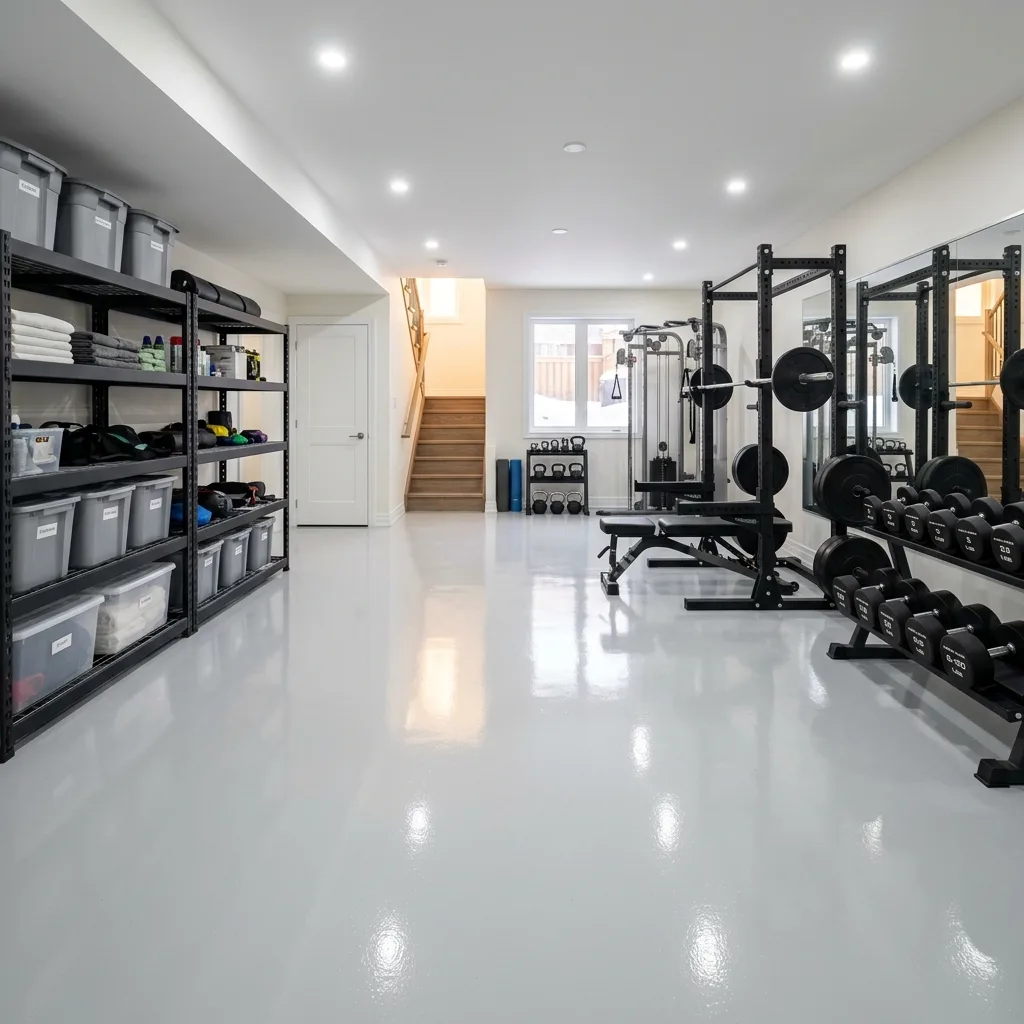
Basement Epoxy Flooring in Ottawa & the National Capital Region - Moisture-Proof Systems for Below-Grade Slabs
For Ottawa homeowners with below-grade slabs, Ottawa Epoxy Flooring installs moisture-mitigated epoxy systems in basements, home gyms, rec rooms, laundry rooms, and below-grade commercial spaces throughout the National Capital Region. The starting point is always ASTM F2170 in-situ humidity testing followed by a moisture-tolerant epoxy primer sized to the reading, then a decorative broadcast or solid-colour finish coat rated for continuous below-grade humidity.
Below-grade concrete in Ottawa carries a vapour load that above-grade floors simply do not face. The city sits on Leda clay, the marine deposit left behind by the ancient Champlain Sea, and that soil holds groundwater far longer than typical glacial till while driving moisture vapour upward through poured slabs. In older Ottawa neighbourhoods like The Glebe, Sandy Hill, and Centretown, ASTM F2170 probes routinely read 75 to 95% relative humidity, well past the 75% threshold at which conventional epoxy adhesion begins to release. A penetrating moisture-tolerant primer is the only chemistry rated to bond permanently at those emission levels. A paint-on damp-proof membrane is not a substitute.
A 600 to 900 sq ft basement typically wraps in one to two working days. Full-home basement systems land in two to three days. Installed pricing runs $4 to $13 per sq ft depending on the mitigation depth required, the broadcast pattern selected, and the coving detail at the perimeter. Pre-war Ottawa homes with original concrete slabs receive a dedicated moisture assessment before any pricing is confirmed.
We serve central Ottawa plus Kanata, Nepean, Orleans, Barrhaven, Westboro, The Glebe, Rockcliffe Park, Stittsville, Manotick, Carp, Vanier, and across the river into Gatineau, plus outlying communities like Kemptville and Arnprior.
Ottawa’s Below-Grade Moisture Challenge
Leda clay is the substrate story every Ottawa basement floor has to answer to. This marine clay, deposited by the Champlain Sea 10,000 years ago, retains groundwater far longer than the glacial till you find in most Ontario cities and drives moisture vapour upward through concrete slabs at emission rates that ordinary coatings simply cannot survive. Homes throughout The Glebe, Sandy Hill, and Old Ottawa South sit on that clay. Their basement slabs consistently register 80 to 95% relative humidity on ASTM F2170 in-situ probes during spring and early summer. Coat that slab without addressing the vapour pressure and the finish bubbles and peels inside two seasons.
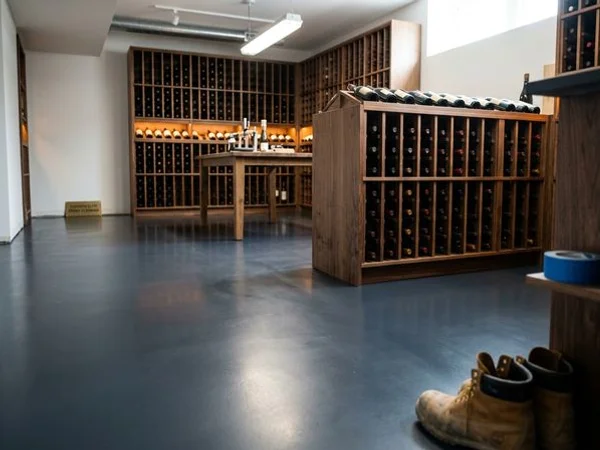
Our basement systems are engineered from the slab up around this exact condition. As Ottawa’s full-spectrum epoxy flooring contractor, we run F2170 probes on every basement slab before a single coat is applied and specify a vapour barrier primer sized to the actual reading. The result is a seamless floor that stays bonded through the aggressive moisture cycling Ottawa hands it year after year. Many homeowners take it further with a decorative metallic pour for a high-end rec-room or wine-cellar finish.
How the Vapour Barrier System Works
Standard epoxy fails below grade because moisture vapour exerts continuous upward pressure through the slab and lifts any coating that is not specifically engineered to hold against it. Our system defeats vapour drive at two points in the assembly.
First, a moisture mitigation primer bonds to damp concrete at the chemical level and lays down a low-permeance layer between slab and finish coat. That primer is a two-component polyurea or moisture-tolerant epoxy rated for slabs testing up to 95% RH. Second, a 100% solids epoxy base coat applied at 8 mils dry film thickness minimum adds a physical vapour retarder on top of the primer. Between the two layers, vapour transmission drops well below the level that causes delamination or blistering.
Centretown and Glebe homes with pre-1960 slabs regularly show F2170 readings between 80 and 95% RH during the spring thaw window from March through May. Above 90% RH, even a standard mitigation primer may not carry the load, and a full reactive polyurea vapour barrier becomes the correct specification before any decorative coating goes down. This is exactly why the 72-hour probe test is not optional for basement epoxy in Ottawa.
What Every Basement Epoxy Install Includes
- Free same-day on-site assessment with sample boards
- 72-hour ASTM F2170 moisture vapour testing
- Diamond grinding and crack repair as needed
- Moisture mitigation primer or vapour barrier when readings require it
- 100% solid zero-VOC epoxy base coat in your chosen colour
- Optional flake broadcast or 3D metallic layering
- Clear protective topcoat for cleaning and traffic durability
- Detailed work around plumbing, columns, and stair edges
- Warranty in writing
Why ASTM F2170 Testing Matters Before Any Basement Coating
ASTM F2170 is the current standard method for measuring in-situ relative humidity inside a concrete slab. The older ASTM F1869 calcium chloride test measures only the surface emission rate, which is not the same thing. An F2170 probe is inserted into a hole drilled 40% of the way through the slab depth and sealed for 72 hours minimum. The number that comes back captures the actual humidity condition inside the concrete mass, and that is the number that predicts long-term vapour drive behaviour under a sealed coating.
The practical difference for basement epoxy is significant. A slab that passes a January calcium chloride test can easily register 88% RH on an April F2170 probe once 224 cm of accumulated snowmelt has saturated the surrounding Leda clay. Contractors who skip the 72-hour wait or rely on a surface-only test will routinely pass a slab that is genuinely too wet to coat. The delamination typically shows up 12 to 24 months later, after the first summer heating cycle drives vapour pressure to its seasonal peak.
The written F2170 record also has warranty value beyond the diagnostic itself. A documented pre-installation reading gives both the homeowner and the installer a baseline against which any future performance question can be evaluated.
Basement Finishes Compared: Epoxy vs Vinyl vs Tile
Luxury vinyl plank is the most common alternative homeowners weigh against epoxy for a basement finish. LVP is a floating floor, meaning it is not bonded to the concrete substrate. That creates an air gap where vapour drive continues to push moisture up against the underside of the planks. In a below-grade space with measured RH above 60% at the slab surface, the joints will swell over time. Most LVP manufacturers void their warranty above a certain slab emission rate, and those rates are routinely exceeded in older Ottawa housing stock without any intervention.
Ceramic and porcelain tile bonded with polymer-modified thin-set creates a more rigid assembly than LVP, but grout remains the weak point. Grout is porous. It absorbs vapour and harbours mould colonies over time in a consistently damp environment. Epoxy grout reduces the risk but adds installation complexity and cost, pushing the total installed price for tile to $12 to $18 per sq ft, well above the $4 to $13 per sq ft range for a full basement epoxy system.
Polished concrete deserves a mention. A Class B grind and polish produces a low-maintenance surface, but polishing adds no vapour barrier whatsoever. Polished concrete over a high-RH slab will eventually show efflorescence as vapour carries dissolved minerals to the surface. Of the common below-grade options, basement epoxy with moisture mitigation is the only one that actively addresses vapour drive rather than working around it.
Pet-Friendly, Zero-VOC, and Safe for Occupied Homes
Below-grade air exchange is lower than any above-grade floor, which is why the zero-VOC specification actually matters here. Solvent-based epoxies off-gas volatile organic compounds during cure, and a basement does not clear that load quickly. A 100% solids system carries no solvent to off-gas, which is precisely why it is the correct chemistry for occupied homes with kids and pets. Once fully cured, the surface is chemically inert and non-porous.
Homes with large dogs get a topcoat selection tuned for scratch resistance. Aliphatic polyurea topcoats rate above 80 on the Shore D scale, significantly harder than a standard clear epoxy topcoat. For high-traffic rec rooms in busy Orleans and Kanata households where the floor sees daily use from dogs, kids’ toys, and rolling furniture, aliphatic polyurea is our standard topcoat rather than an upgrade line.
Basement Epoxy Flooring Cost
Basement epoxy pricing varies primarily by system complexity and slab condition. A standard two-coat system with moisture mitigation primer and solid-colour 100% solids epoxy runs $4 to $5.50 per sq ft installed. That covers slabs with ASTM F2170 readings under 75% RH that only need the primer for mitigation.
Slabs above 75% RH require a reactive polyurea vapour barrier coat before the decorative system. That layer adds $0.75 to $1.25 per sq ft depending on product and measured vapour emission rate. For most Centretown and Glebe basements tested in spring, this brings the working total to $4.75 to $6.75 per sq ft.
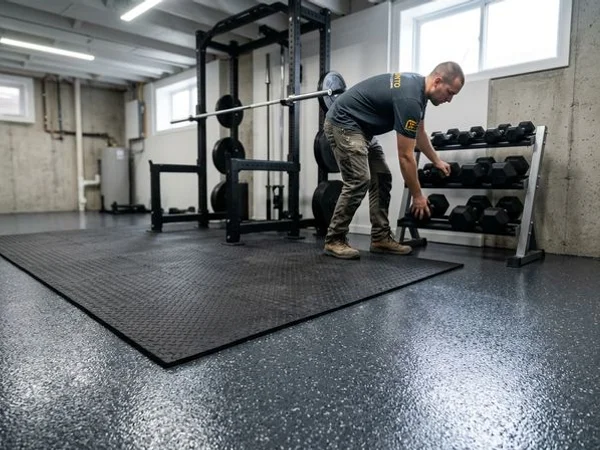
Decorative upgrades take pricing into the $6.50 to $13 per sq ft range. Full-flake broadcast systems add texture and visual depth and are the most popular choice for basement gyms across the National Capital Region. Metallic pigment systems run $8 to $13 per sq ft installed and are commonly specified for home theatres and wine cellars in Rockcliffe Park and Westboro renovations. Substrate repairs, meaning crack routing and filling, are quoted on assessment but typically add $0.50 to $2.00 per sq ft on slabs in poor condition.
Waterproofing vs Epoxy: Understanding the Difference
Basement epoxy and basement waterproofing solve different problems, and conflating the two is one of the most common mistakes in renovation planning. Epoxy addresses vapour drive, the diffusion of moisture vapour up through an otherwise structurally sound slab. Interior waterproofing systems like a French drain with a sump pump address hydrostatic pressure, the physical force of groundwater accumulating against a foundation wall or under a slab.
Active water intrusion through wall cracks, window wells, or floor-wall joints needs to be addressed before any floor coating is installed. Applying epoxy over active water infiltration produces delamination within months, not years. For basements with no active entry but consistently high vapour readings, which describes the majority of older homes in Ottawa’s central neighbourhoods, epoxy with a reactive polyurea vapour barrier is the correct intervention.
Questions Homeowners Ask
How much does basement epoxy cost for a 1,000 sq ft basement?
A 1,000 sq ft basement with a standard moisture mitigation primer and solid-colour epoxy runs roughly $4,000 to $5,500 installed. If the slab tests above 75% RH on the F2170 probe, common in The Glebe and Centretown come spring, add $750 to $1,250 for the reactive polyurea vapour barrier layer. Decorative flake or metallic finishes take the total to $6,500 to $9,000 for the same footprint.
Can basement epoxy be installed in winter
Yes, with conditions. Both concrete and epoxy chemistry require a minimum substrate temperature of 10 degrees Celsius to cure correctly. An unheated basement in January will fall well below that threshold. We require the space to be heated to at least 15 degrees Celsius for 48 hours before prep begins, and held there through cure. Most occupied homes already meet that requirement.
What is the lifespan of a basement epoxy floor?
Correctly installed, meaning over an F2170-tested slab with the appropriate vapour mitigation, a basement epoxy floor stays in good condition 15 to 20 years or more under normal residential use. The topcoat will show wear in high-traffic zones before the base coat does. Re-topcoating at $1.50 to $2.50 per sq ft refreshes the surface without replacing the full system.
Our Basement Epoxy Results in Ottawa
Basement Epoxy Pricing
Includes ASTM F2170 moisture testing, vapour barrier where needed, and seamless finish.
Why Ottawa Customers Choose Ottawa Epoxy Flooring for Basement Epoxy
Moisture-Tested First
Vapour drive through the slab is the leading cause of failed basement floors, hands down. Every slab we quote gets an F2170 probe before we agree on a system.
Zero-VOC, Pet-Safe
Living-space chemistry with no harsh solvent fumes. Once cured, the surface is safe for kids, dogs, and cats with normal household ventilation.
Seamless Finish
Nothing to trap moisture the way grout lines do. Easier to clean, easier to keep dry, visually open.
Warranty
Written coverage backs the work because we control both the surface prep and the material.
How Basement Epoxy Works
Moisture Vapour Testing
In-situ ASTM F2170 relative-humidity probes stay sealed in the slab for a full 72 hours. The reading dictates exactly which mitigation layer the floor needs.
Prep & Vapour Barrier
The slab is diamond-ground, cracks are repaired, and a moisture mitigation primer or reactive polyurea vapour barrier is applied based on the F2170 result.
Seamless Base Coat
A zero-VOC 100% solids epoxy base coat in your chosen colour is applied seamlessly, edge to edge, working cleanly around plumbing, columns, and stair transitions.
Clear Protective Topcoat
A clear aliphatic polyurea topcoat locks in the finish. It is easy to mop, resists pet claws, and stands up to daily rec-room traffic. Furniture back in place in 24 to 48 hours.
Ready for a Free On-Site Assessment?
Same-day quotes across Ottawa. WSIB-certified, $2M liability on every project.
What Customers Say About Our Basement Epoxy
"F2170 probe on our Nepean bungalow read 88% RH. The crew installed the full reactive polyurea vapour barrier before the zero-VOC epoxy base. Two spring thaws in, and the floor is bone dry."
"Home gym in the basement. Seamless, easy to clean, kids love it, dog loves it. Could not be happier."
"Rec room in our Barrhaven place done in a Gunmetal metallic. F2170 tested first, Warranty in writing. Looks like a magazine spread."
Basement Epoxy FAQs
What is the point of moisture testing before a basement epoxy install?
Vapour drive through concrete is the number-one reason basement floors bubble and let go. Every slab we install on gets an ASTM F2170 in-situ humidity test, and the reading tells us whether a standard mitigation primer or a full reactive polyurea vapour barrier is required. Skipping this step is exactly why competitor floors start peeling in year two or three.
Is a basement epoxy system safe for kids and pets?
Absolutely. We specify 100% solids zero-VOC chemistry rated for occupied living spaces once cured. A seamless surface is easier to sanitize than tile because there are no grout channels to hold bacteria, and there is nothing for pet claws to catch on.
Can epoxy solve a damp basement problem?
Epoxy paired with the correct vapour barrier stops moisture from migrating up through the slab and lifting the finish. It is not a substitute for foundation waterproofing. Active wall leaks or hydrostatic seepage need to be remediated separately before any coating goes down.
How much should I budget for basement epoxy in Ottawa?
Standard solid-colour systems land at $6.50 to $12 per sq ft. Decorative flake broadcasts and 3D metallic finishes run higher, generally $6.50 to $13 per sq ft. Every quote includes moisture testing and any vapour mitigation the F2170 reading calls for.
What is the elapsed timeline for an install?
Counting the 72-hour moisture-test window, most basements are complete inside a week of elapsed time. The active work itself is typically two to three days, scheduled around your household routine.
Can I choose a custom colour?
Yes. Solid colours, flake broadcasts for texture, and 3D metallic finishes are all on the table. We bring physical sample boards to the on-site quote so you pick against real materials, not a screen.
What warranty comes with a basement epoxy floor?
Every install ships with a written Warranty. Coverage addresses delamination, peeling, and bubbling, the specific failure modes that come from cutting corners on prep or moisture testing. Because we control both the substrate work and the material, we can back the floor fully.
How does epoxy stack up against LVP for an Ottawa basement?
Luxury vinyl plank sits on top of the slab as a floating floor. Vapour drive continues to push moisture up under the planks, and over time the joints swell and buckle. Epoxy bonds directly to the concrete and seals vapour at the slab level, which makes it the more durable long-term specification for a below-grade space.
Do we have to move out for the install?
No. The 72-hour probe period requires no work in the space. Active coating days typically take one to two days of light disruption in the affected area. Zero-VOC chemistry means normal household ventilation is sufficient and no relocation is required.
When can I install basement epoxy after a spring thaw?
The F2170 probe answers that for us directly. Ottawa slabs absorb ground moisture from snowmelt right through April and into May, and we routinely see elevated RH readings in The Glebe and Centretown during that window. When the reading is above 75%, a vapour barrier coat goes down first as a matter of protocol. It is not an upsell, it is what the slab requires.
Can we apply epoxy over existing floor paint?
No. Old paint or coating has to come off completely by diamond grinding before any epoxy can bond to the concrete underneath. Trying to overcoat existing paint is one of the most common failure modes we see on redo jobs. Our prep starts at bare concrete every time.
What decorative options are available for a basement floor?
Options include solid colour, full flake broadcast for texture and pattern that hides minor slab variation, partial flake for a terrazzo look, and 3D metallic finishes with pigmented aliphatic polyurea topcoats. Metallic systems are the popular pick for home theatres, wine cellars, and high-end rec rooms.
Basement Epoxy Flooring by city
Local pages with area-specific detail across the NCR:
Basement Epoxy Flooring in Ottawa
Local basement epoxy for Ottawa homes and businesses.
Learn more →Basement Epoxy Flooring in Kanata
Local basement epoxy for Kanata homes and businesses.
Learn more →Basement Epoxy Flooring in Nepean
Local basement epoxy for Nepean homes and businesses.
Learn more →Basement Epoxy Flooring in Barrhaven
Local basement epoxy for Barrhaven homes and businesses.
Learn more →Basement Epoxy Flooring in Orleans
Local basement epoxy for Orleans homes and businesses.
Learn more →Basement Epoxy Flooring in Gatineau
Local basement epoxy for Gatineau homes and businesses.
Learn more →Basement Epoxy Flooring in Rockcliffe Park
Local basement epoxy for Rockcliffe Park homes and businesses.
Learn more →Basement Epoxy Flooring in Vanier
Local basement epoxy for Vanier homes and businesses.
Learn more →Basement Epoxy Flooring in Westboro
Local basement epoxy for Westboro homes and businesses.
Learn more →Basement Epoxy Flooring in The Glebe
Local basement epoxy for The Glebe homes and businesses.
Learn more →Related Services
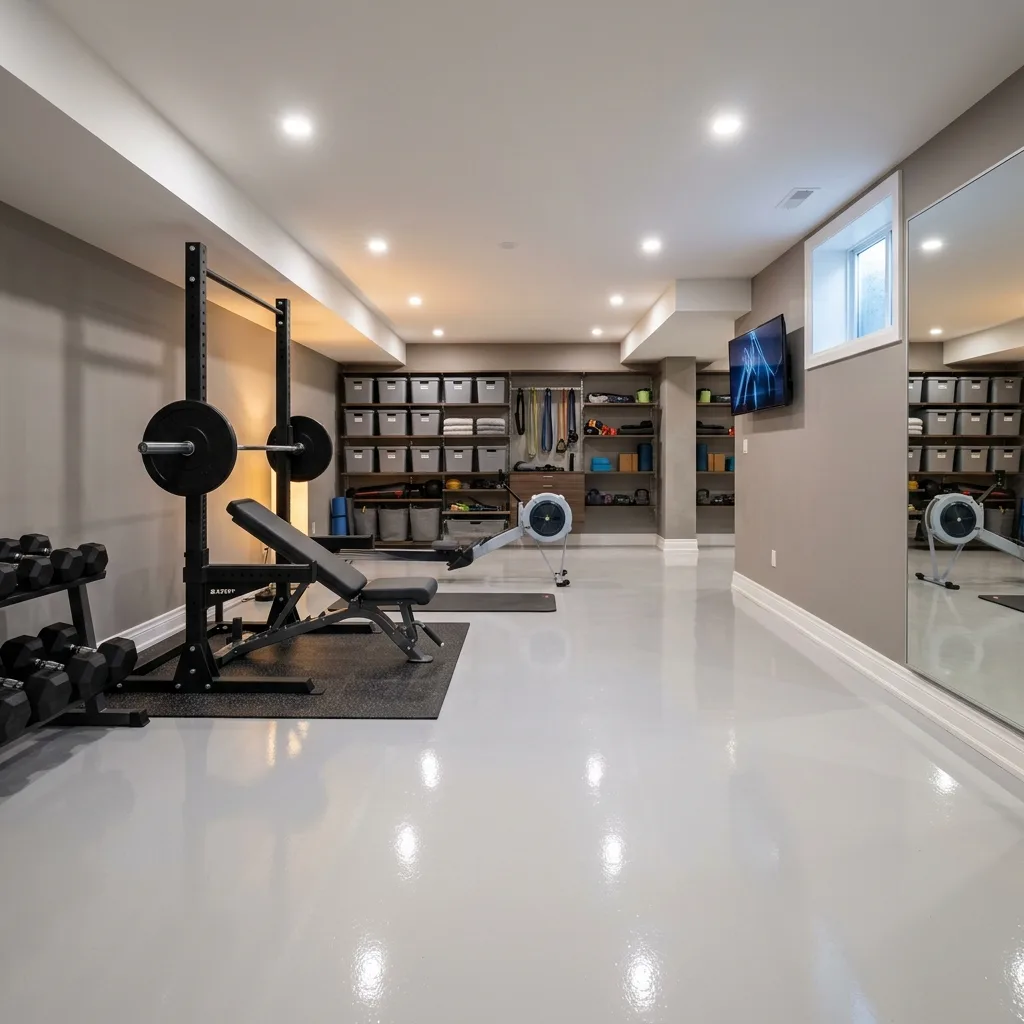
Decorative Metallic Epoxy Flooring in Ottawa & the National Capital Region
Hand-manipulated metallic pigment builds deliver a 3D liquid-art surface where no two floors are ever identical. Installed pricing runs $13 to $35 per sq ft; a 500 sq ft basement or showroom wraps in 2 to 3 days. A UV-stable aliphatic polyaspartic topcoat holds colour vivid under Ontario sun and retail LED lighting past the 15-year mark.
Garage Floor Epoxy in Ottawa & the National Capital Region
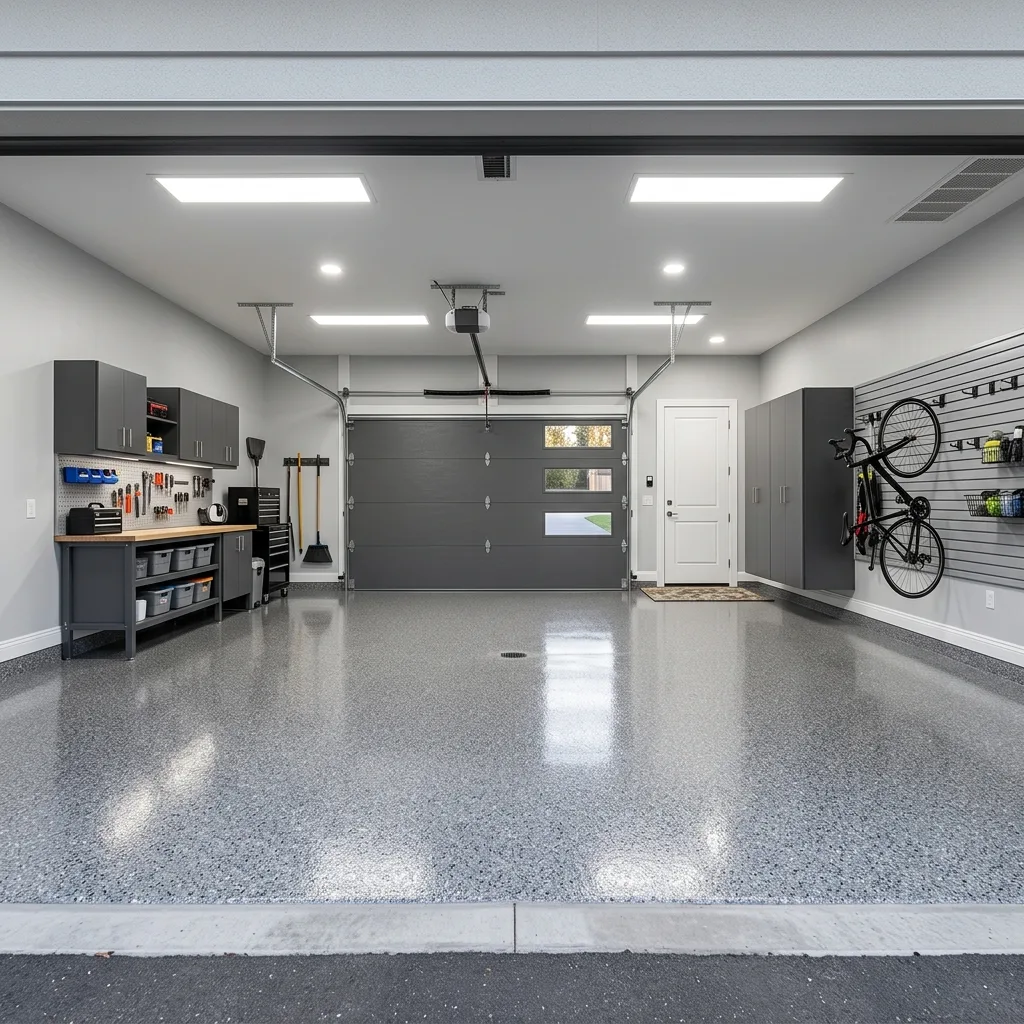
Salt-proof, hot-tire-resistant garage floor systems built for NCR winters. Diamond-ground to CSP 3, ASTM F2170 moisture verified, 100% solid epoxy base with quartz or metallic flake, and a UV-stable polyaspartic topcoat. A 400 sq ft single-car garage runs roughly $2,400 to $3,800 installed and wraps in one to two days. Anti-slip grit and WSIB coverage standard.
Concrete Repair & Restoration in Ottawa & the National Capital Region
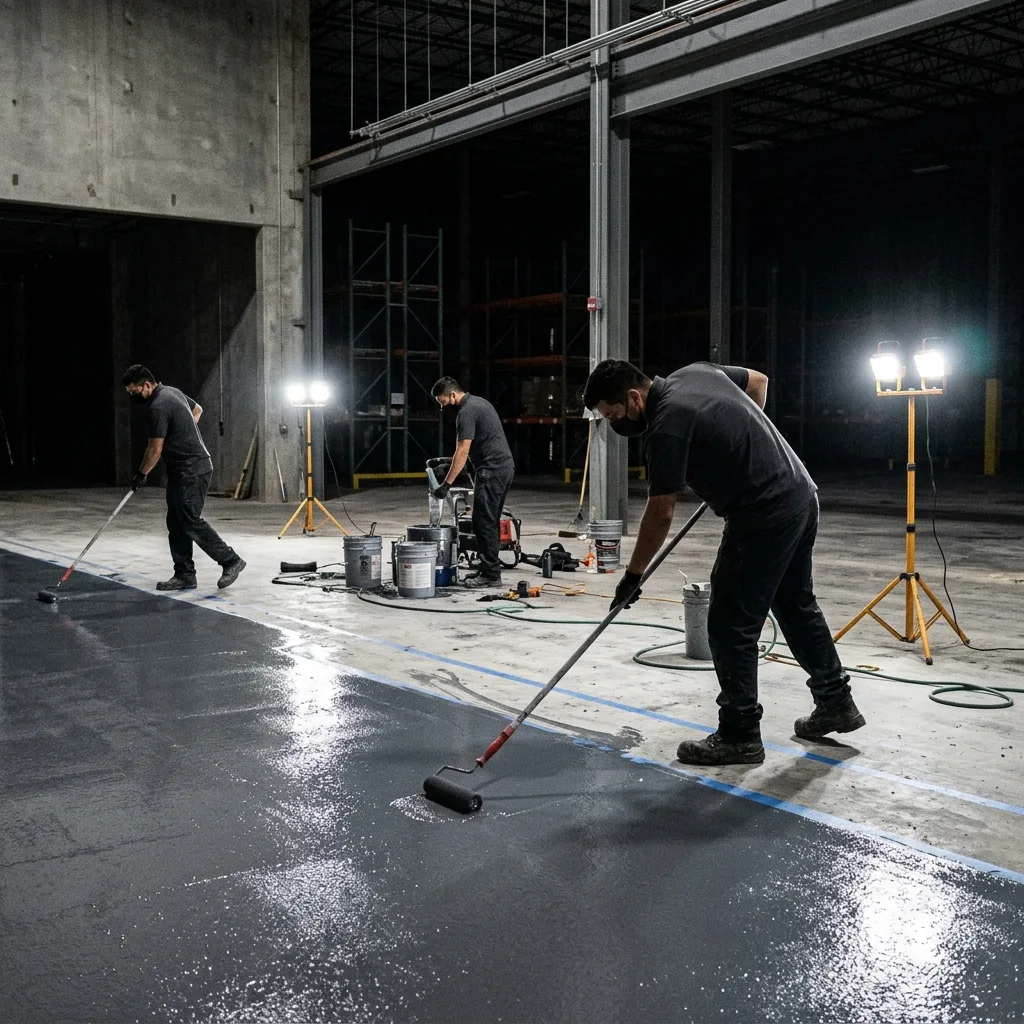
Carbon-fibre crack stitching, polyurea injection, spall patching with epoxy mortar, and self-levelling underlayment restore any NCR concrete slab back to a CSP 3 bondable substrate before coating. Crack work opens at $8 to $18 per linear foot; slab resurfacing from $3 per sq ft. CSP 3 is grind-gauge confirmed before any coating is applied.
Ready to Book Basement Epoxy?
Same-day free on-site assessment. WSIB-certified, $2M liability on every project.